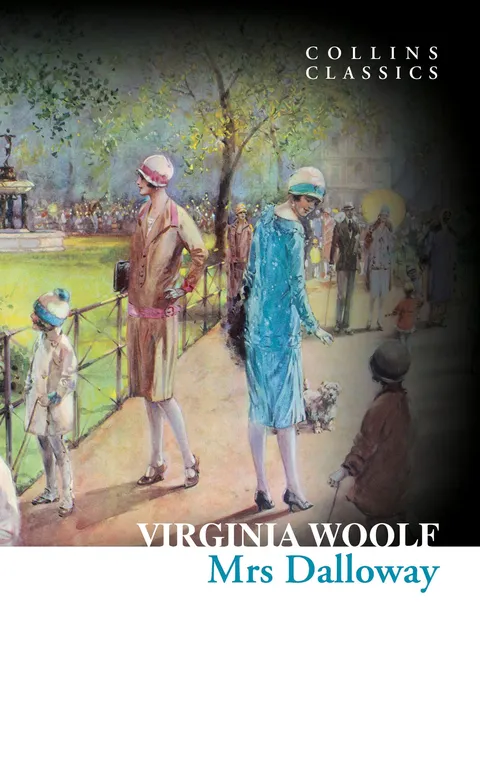
Mrs Dalloway
Report an issue
Tell us what's wrong and we'll take a look.
Thanks – we got it. We'll review and follow up if needed.
HarperCollins is proud to present our range of timeless literary classics.
Clarissa Dalloway is a woman of high-society – vivacious, hospitable and sociable on the surface, yet underneath troubled and dissatisfied with her life in post-war Britain. This disillusionment is an emotion that bubbles under the surface of all of Woolf’s characters in Mrs Dalloway.
Centred around one day in June where Clarissa is preparing for and holding a party, her interior monologue mingles with those of the other central characters in a stream of consciousness, entwining, yet never actually overriding the pervading sense of isolation that haunts each person.
One of Virginia Woolf’s most accomplished novels, Mrs Dalloway is widely regarded as one of the most revolutionary works of the 20th century in its style and the themes that it tackles. The sense that Clarissa has married the wrong person, her past love for another female friend and the death of an intended party guest all serve to amplify this stultifying existence.
Virginia Woolf
Virginia Woolf was born in 1882, the youngest daughter of the Victorian writer Leslie Stephen. After her father's death, Virginia moved with her sister Vanessa (later Vanessa Bell) and two of her brothers, to 46 Gordon Square, which was to be the first meeting place of the Bloomsbury Group. Virginia married Leonard Woolf in 1912, and together they established the Hogarth Press. Virginia also published her first novel, The Voyage Out, in 1912, and she subsequently wrote eight more, several of which are considered classics, as well as two books of seminal feminist thought. Woolf suffered from mental illness throughout her life and committed suicide in 1941.
More by Virginia Woolf





Why Readwise Books?
Readwise Books is an ebook & audiobook platform that automatically logs how much you and your friends read, making it fun and easy to read more. Learn more →