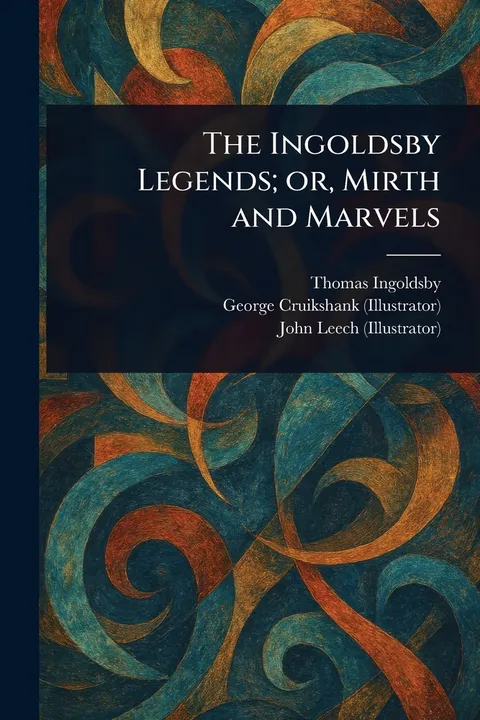
The Ingoldsby Legends; or, Mirth and Marvels
Report an issue
Tell us what's wrong and we'll take a look.
Thanks – we got it. We'll review and follow up if needed.
Step into a world of "Mirth and Marvels" with "The Ingoldsby Legends," a collection of uproarious tales penned by Thomas Ingoldsby. This enduring work of 19th-century English fiction blends folklore, legend, and gothic elements with a generous helping of humor, all rendered in lively verse.
Explore a landscape populated with eccentric characters and extraordinary events, where the boundaries between the real and the fantastic blur. "The Ingoldsby Legends" showcases a unique blend of genres, offering both chilling gothic chills and sidesplitting amusement.
Experience the timeless appeal of these carefully crafted narratives, celebrated for their wit, imagination, and masterful storytelling. This meticulously prepared print edition brings these classic legends to life, offering readers a chance to rediscover the enduring charm of Ingoldsby's world. A treasure trove of humorous fiction and delightful poetry, "The Ingoldsby Legends" promises a captivating journey for all who dare to embark.
This work has been selected by scholars as being culturally important, and is part of the knowledge base of civilization as we know it.
This work is in the public domain in the United States of America, and possibly other nations. Within the United States, you may freely copy and distribute this work, as no entity (individual or corporate) has a copyright on the body of the work.
Scholars believe, and we concur, that this work is important enough to be preserved, reproduced, and made generally available to the public. We appreciate your support of the preservation process, and thank you for being an important part of keeping this knowledge alive and relevant.
John Leech
John Leech (29 August 1817 - 29 October 1864) was a British caricaturist and illustrator. He was best known for his work for Punch, a humorous magazine for a broad middle-class audience, combining verbal and graphic political satire with light social comedy. Many of his cartoons were concerned with the plight of the poor, though others were more straightforward humorous drawings. Some made occasional use of speech balloons and sequential drawings. One of them, 'Mr. Briggs' (1849), can be considered a prototypical comic series. Dickens said of his pictures that they were 'always the drawings of a gentleman.'
More by John Leech


Why Readwise Books?
Readwise Books is an ebook & audiobook platform that automatically logs how much you and your friends read, making it fun and easy to read more. Learn more →