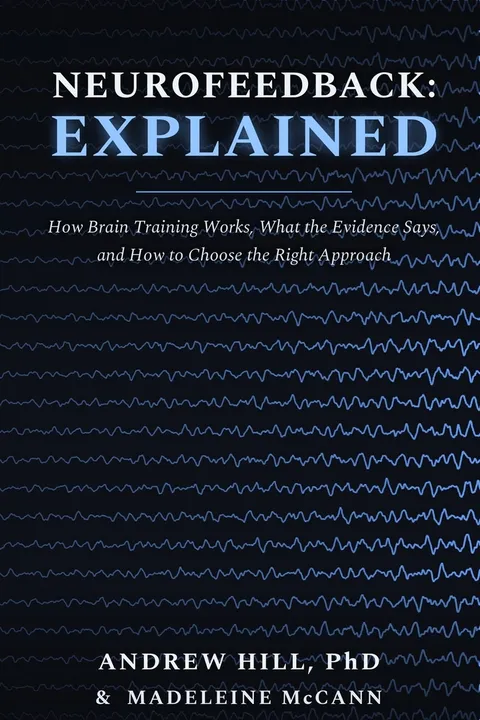
Neurofeedback
Explained: How Brain Training Works, What the Evidence Says, and How to Choose the Right Approach
Report an issue
Tell us what's wrong and we'll take a look.
Thanks – we got it. We'll review and follow up if needed.
Neurofeedback uses operant conditioning to train selected features of brain activity. Feedback changes in real time with the measured signal. The goal may be steadier attention, calmer reactions, or better sleep, but benefit varies and should be judged by symptoms and daily function, not by an EEG change alone. Cognitive neuroscientist Andrew Hill, PhD, and neurofeedback coach Madeleine McCann explain how it works, what the evidence really says, how QEEG observations can inform a working hypothesis without serving as a diagnosis, how to evaluate a provider, and what to do when training does not work.
Chapters on anxiety, attention, trauma, sleep, autism, addiction, and performance examine recurring, nonspecific EEG observations reported in some clinical and research groups, the limits of those findings, and how providers decide what to test. Written for the reader who wants to understand the field before deciding what to do about it.
If you have been told neurofeedback might help, read this before you spend a dollar.












Why Readwise Books?
Readwise Books is an ebook & audiobook platform that automatically logs how much you and your friends read, making it fun and easy to read more. Learn more →