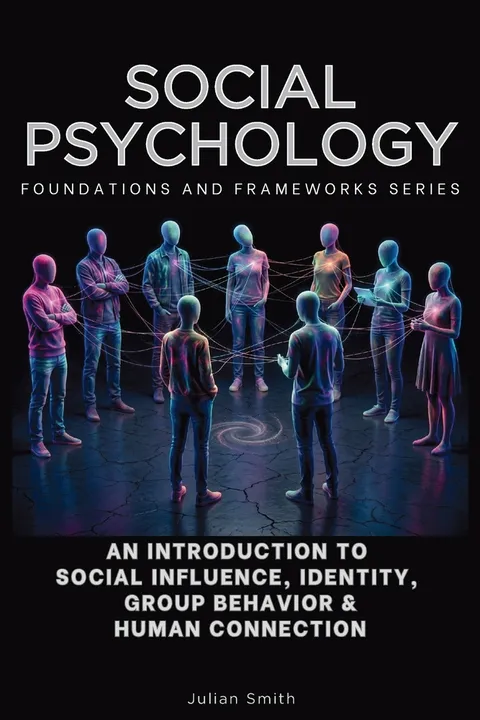
Social Psychology, Foundations and Frameworks Series
An Introduction to Social Influence, Identity, Group Behavior & Human Connection
Report an issue
Tell us what's wrong and we'll take a look.
Thanks – we got it. We'll review and follow up if needed.
Social psychology explains why you act differently around other people than you do alone. This introduction covers influence, identity, and group behavior, and it tells you which famous findings survived retesting and which fell apart.
Nine chapters move from one mind reading a situation, to two people sizing each other up, to crowds, juries, and workplaces. Every claim sits next to the study behind it, with the design and the numbers stated plainly so you can weigh the evidence yourself. No background in the subject is assumed.
Topics covered across the chapters:
- The person-situation debate and construal, meaning your reading of a situation drives your response more than the facts of it do
- Research methods: random assignment, correlational and archival work, and the ethical rules that grew out of studies like Milgram's
- Self-concept, self-esteem, social comparison, and impression management
- Attribution theory and the mental shortcuts that make a stranger's rudeness look like character while your own looks like a bad morning
- Cognitive dissonance, the elaboration likelihood model, source credibility, and the gap between stated beliefs and actual behavior
- Conformity, foot-in-the-door and door-in-the-face tactics, obedience to authority, and how a small minority moves a majority
- Cohesion, social facilitation, loafing, groupthink, leadership, and intergroup conflict
- Stereotype formation, the fight over implicit bias measurement, and which prejudice interventions produce results
- The bystander effect, altruism, aggression, and applied work in hospitals, offices, courtrooms, and public policy
Back matter you will actually use: a historical timeline running from the 1890s through the current period of methodological reform, discussion questions closing every chapter with worked example answers, a glossary of terms, and a works cited list that sends you to the original studies rather than secondhand summaries.
Three readers get the most out of this:
- Students taking a first course who need the vocabulary and the standards before the exam
- Managers, teachers, clinicians, and anyone else whose job is reading people accurately
- Curious readers who want the real research on why humans behave one way alone and another way in company
The replication crisis reset this field after 2011, and the book treats that reckoning as part of the material rather than a footnote. You get the Asch line studies, the seminary students who stepped over a groaning stranger, and the hotel towel card that beat the environmental appeal. You also get where the Stanford Prison Experiment went wrong and why effect sizes published before 2011 run about double what careful retesting finds. Telling the survivors from the casualties is most of what it means to understand the subject today.
Julian Smith
JULIAN SMITH received a Banff Mountain Book Award and a Lowell Thomas Travel Journalism Award for Crossing the Heart of Africa: An Odyssey of Love and Adventure. The coauthor of Smokejumper: A Memoir by One of America's Most Select Airborne Firefighters, he has written for Smithsonian, National Geographic Traveler, Wired, Outside, and the Washington Post, among other publications. Julian lives in Portland, Oregon.
More by Julian Smith









Why Readwise Books?
Readwise Books is an ebook & audiobook platform that automatically logs how much you and your friends read, making it fun and easy to read more. Learn more →