Report an issue
Tell us what's wrong and we'll take a look.
Thanks – we got it. We'll review and follow up if needed.
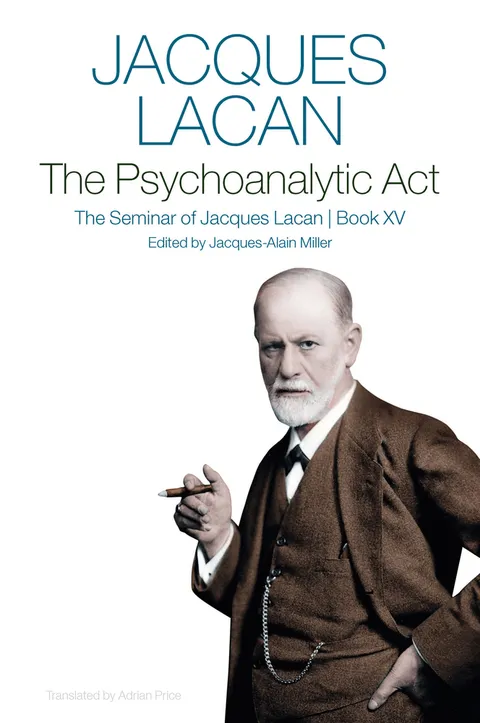
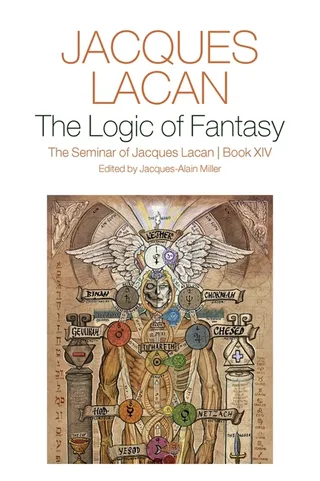
This Seminar is a turning point. It deals with a single question, to which hitherto Lacan had never responded unless obliquely: 'what is an analyst?' His reply is that an analyst is an analysand (a word which Lacan introduces to replace the term 'being analysed') who has seen the analytic experience through to its end. What is this ideal end? To find out, one needs to articulate the logic of the pathway through an analysis. At its beginning, there is an unprecedented desire, which presupposes a breach, that is to say an act, in the manner of Caesar crossing the Rubicon. This act is the analysand's act, but the psychoanalytic act in the strict sense is performed by the psychoanalyst by opening up the field of 'subject supposed to know' to the analysand, in which the unconscious is deciphered. At the end, the s.s.k. dissolves, while the analyst, its support, is evacuated as the discard of the operation, like Oedipus ending his life with his eyes gouged out. The analysand, now analysed, takes over as analyst. But why, when he now knows what lies in store for him?
A few lessons are devoted to the logic of quantification, which Lacan starts to explore and which will later develop into his theory of sexuation.
The unforeseen conclusion sees Lacan commenting in the heat of the moment on the events of May '68, which were coeval with the end of the Seminar.
Jacques-Alain Miller
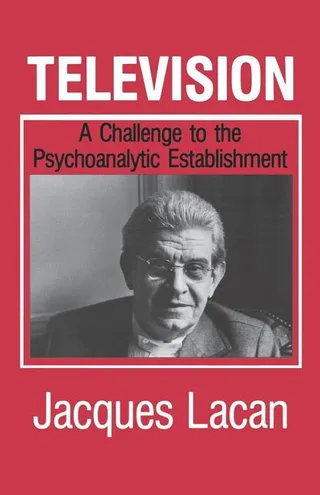
Jacques Lacan
The psychoanalyst Jacques Lacan (1901-1981) was one of the twentieth century's most influential thinkers. His many published works include Ecrits and The Seminars.
More by Jacques Lacan
Jacques-Alain Miller
Jacques-Alain Miller is Director of the Department of Psychoanalysis at the University of Paris VIII and editor of Lacan's Seminars.
More by Jacques-Alain Miller



Why Readwise Books?
Readwise Books is an ebook & audiobook platform that automatically logs how much you and your friends read, making it fun and easy to read more. Learn more →