Report an issue
Tell us what's wrong and we'll take a look.
Thanks – we got it. We'll review and follow up if needed.
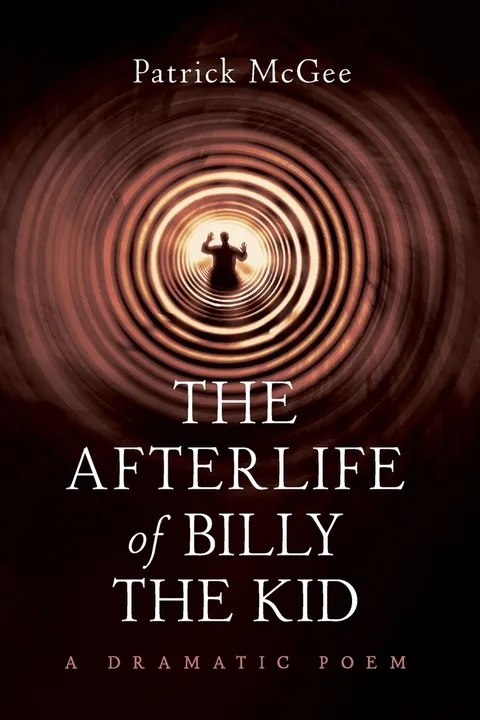
A fable woven into the fabric of history, this poem tells the story of a Billy the Kid, who does not die in 1881 but lives to be an old man, which he calls his afterlife. Through dramatic monologues in heptameter lines with two primary narrators, Billy and a character named Alias, the poem narrates Billy’s early days and the Lincoln County War. Then the poem narrates his afterlife that includes encounters with a Yaqui leader in Mexico where he also has a surreal vision of Our Lady of Guadalupe; Oscar Wilde and former slave and cowboy Nat Love in Colorado; Nate Champion in the Johnson County war of Wyoming; Theodore Roosevelt in Dakota Territory; Sitting Bull at Standing Rock; the love of his life in San Francisco; revolutionaries in the Philippines; and Emiliano Zapata in the Mexican Revolution. It’s a story of loss and self-forgiveness as Billy struggles against both injustice and the destructive force of his own need for vengeance. Prosaic lines tell the story, more poetic parts break out of narrative into something visionary and philosophical, even spiritual. While addressing a world riddled with tragedy, this work remains a song of redemption through the persistence of hope.
Patrick McGee
Patrick McGee was the Financial Times’s principal Apple reporter from 2019 to 2023, during which time he won a San Francisco Press Club Award for his coverage. He joined the newspaper in 2013, in Hong Kong, before reporting from Germany and California. Previously, he was a bond reporter at The Wall Street Journal. He has a master’s degree in global diplomacy from SOAS, University of London, and a degree in religious studies from the University of Toronto. He and his family make their home in the Bay Area.
More by Patrick McGee


Why Readwise Books?
Readwise Books is an ebook & audiobook platform that automatically logs how much you and your friends read, making it fun and easy to read more. Learn more →