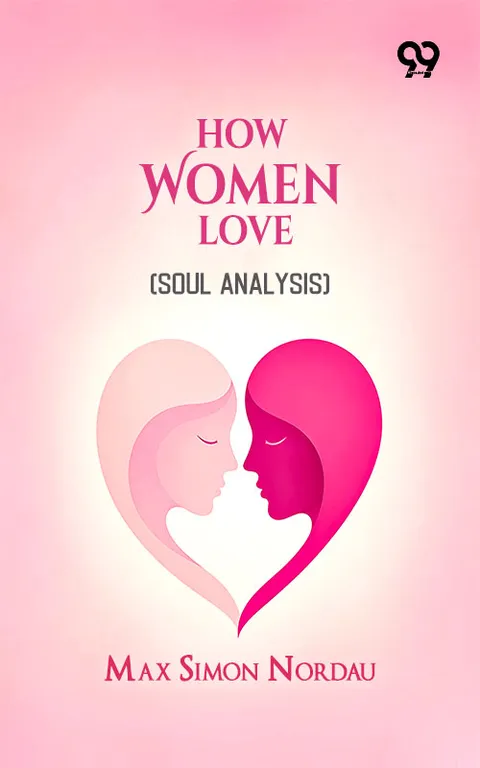
How Women Love: (Soul Analysis)
Report an issue
Tell us what's wrong and we'll take a look.
Thanks – we got it. We'll review and follow up if needed.

How Women Love: Soul Analysis is a late nineteenth century novel by Max Simon Nordau that blends psychological exploration with social critique, making it a significant literary work in cultural and philosophical storytelling. It examines the complexities of love, desire, and human behaviour within rigid societal frameworks. This literary work gains importance through How Women Love Soul Analysis, presenting a narrative grounded in 19th century social commentary love and societal expectations novel. Through Panna Molnár character beauty and desire psychological fiction, the story explores how physical appearance and emotional intensity shape personal relationships and public perception. It reflects gender roles relationships and emotional conflict classic literature, highlighting tensions between individual desire and imposed social norms. The narrative also aligns with psychological analysis of love and human behaviour Nordau fiction, offering insight into the emotional and instinctive forces that influence human actions and moral judgment. Its broader literary significance lies in its contribution to psychological and sociological fiction, where personal experience becomes a lens for examining societal structures. The novel strengthens understanding of nineteenth century European literature by addressing how beauty, gender expectations, and emotional conflict intersect, shaping both individual identity and collective moral values.
Max Simon Nordau
Max Simon Nordau was a Zionist leader, doctor, writer, and social commentator. He co-founded the Zionist Organization with Theodor Herzl and served as president or vice-president of various Zionist congresses. As a social commentator, he published The Conventional Lies of Our Civilization (1883), Degeneration (1892), and Paradoxes (1896). Although Degeneration was not his most popular or profitable work while alive, it is the book that is most recognized and cited now. Simon (Simcha) Maximilian Südfeld (after Max Nordau) was born in Pest, Kingdom of Hungary, which was part of the Austrian Empire. His father, Gabriel Südfeld, was a rabbi who also worked as a Hebrew tutor. Simon Maximilian Sudfeld was born in Pest, Kingdom of Hungary (then part of the Austrian Empire). His father, Gabriel Sudfeld, worked as a Hebrew tutor in addition to being a rabbi. Nordau, an Orthodox Jew, attended a Jewish elementary school before receiving a medical degree from the University of Pest in 1872. He then traveled for six years, visiting the major nations of Europe. He changed his name before traveling to Berlin in 1873. In 1878, he began practicing medicine in Budapest. In 1880, he traveled to Paris. He was a correspondent for Neue Freie Presse in Paris and lived there for the majority of his life.
More by Max Simon Nordau





Why Readwise Books?
Readwise Books is an ebook & audiobook platform that automatically logs how much you and your friends read, making it fun and easy to read more. Learn more →