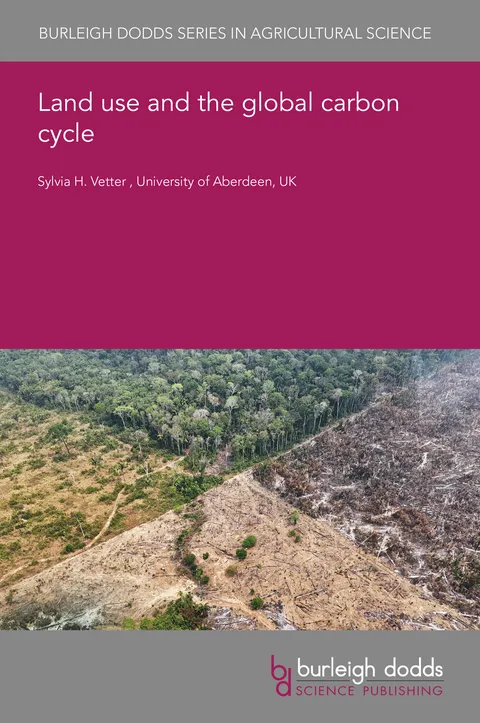
Land use and the global carbon cycle
Report an issue
Tell us what's wrong and we'll take a look.
Thanks – we got it. We'll review and follow up if needed.
Land use change and agricultural expansion are major drivers of greenhouse gas emissions and biodiversity loss, threatening climate stability and ecosystem resilience. At the same time, land systems offer some of the most promising opportunities for carbon sequestration and climate mitigation. This chapter explores the role of terrestrial ecosystems (forests, grasslands, croplands, and permafrost) in the global carbon cycle, examining carbon stocks and fluxes. Land-based mitigation strategies are assessed, including soil carbon sequestration, biochar, reforestation, and agroecological practices. Considering current scientific understanding, their technical potentials, trade-offs, and regional applications are evaluated. The chapter also addresses challenges in implementation, such as measurement and verification, land tenure, climate finance, and equity. Integrating biophysical science with policy insights highlights the critical role of land in achieving global climate goals and net zero.
Dr Sylvia Vetter
Dr Sylvia Vetter is an Advanced Research Fellow in the School of Biological Sciences at the University of Aberdeen, UK and is a member of the School’s Environmental Modelling Group. She is noted for her research focusing on modelling GHG emissions from agriculture and the potential effectiveness of different mitigation options. Dr Vetter was involved in developing the Cool Farm Tool, one of the leading carbon calculation tools used by UK farmers in particular. She was previously Chair of Meteorology at the Technical University of Dresden, Germany.
More by Dr Sylvia Vetter


Why Readwise Books?
Readwise Books is an ebook & audiobook platform that automatically logs how much you and your friends read, making it fun and easy to read more. Learn more →