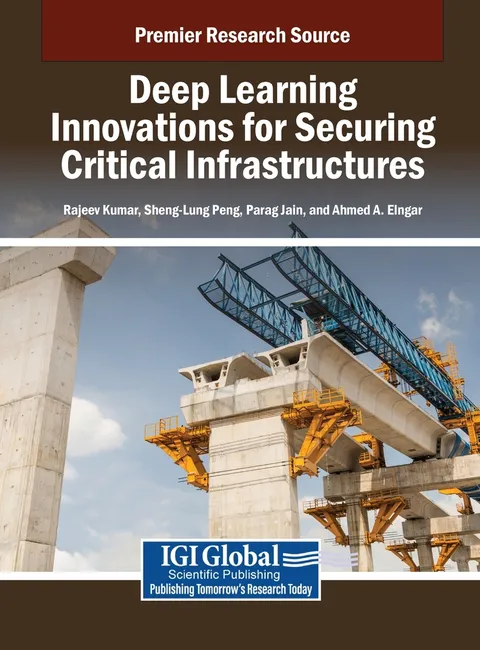
Deep Learning Innovations for Securing Critical Infrastructures
Report an issue
Tell us what's wrong and we'll take a look.
Thanks – we got it. We'll review and follow up if needed.
Deep learning innovations play a crucial role in securing critical infrastructures, offering advanced solutions to protect vital systems from sophisticated cyber threats. By leveraging neural networks and advanced algorithms, deep learning enables real-time anomaly detection, pattern recognition, and predictive threat analysis, which are essential for safeguarding critical sectors such as energy, transportation, healthcare, and finance. These technologies can identify vulnerabilities, respond to breaches, and adapt to new attacks, providing a strong defense against cyber risks. As the digital landscape becomes more interconnected, the integration of deep learning into cybersecurity strategies will enhance resilience while ensuring the safe operation of essential services. Deep Learning Innovations for Securing Critical Infrastructures explores the cutting-edge integration of neural networks and artificial intelligence (AI) in modern cybersecurity systems. It examines how AI, particularly neural network models, is revolutionizing cybersecurity by automating threat detection, analyzing complex data patterns, and implementing proactive defense mechanisms. This book covers topics such as blockchain, cloud computing, and event management, and is a useful resource for business owners, computer engineers, data scientists, academicians, and researchers.
Sheng-Lung Peng
Dr. Sheng-Lung Peng obtained Doctor of Philosophy in Computer Science, National Tsing Hua University, Taiwan, 1999.Thesis: A study of graph searching on special graphs. He is a Professor, Department of Computer Science and Information Engineering, National Dong Hwa University, Hualien, Taiwan. Presently he is a Director, Information Service Association of Chinese Colleges, Taiwan and Taiwan Regional Contest Director of ACM-ICPC.


Why Readwise Books?
Readwise Books is an ebook & audiobook platform that automatically logs how much you and your friends read, making it fun and easy to read more. Learn more →