Report an issue
Tell us what's wrong and we'll take a look.
Thanks – we got it. We'll review and follow up if needed.
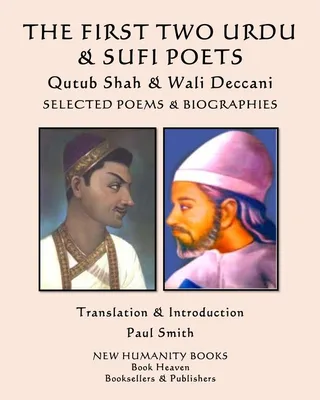
WALI DECCANI: LIFE & POEMS Introduction to Sufi Poets Series Translation & Introduction by Paul Smith Wali Deccani was born in 1667 in Aurangabad, Maharashtra, India. He loved travelling and his visit to Delhi in 1700 is considered to be of significance for Urdu ghazals. His simple, sensuous and melodious poems in Urdu, awakened the Persian loving poets of Delhi to the beauty and capability of 'Rekhta' (the old name for Urdu) as a medium of poetic expression. He stimulated the growth and development of Urdu ghazal in Delhi. Wali lived in a time of political and social turmoil but sought his sustenance from the larger mystic traditions of India. He considered literature as a way of negotiating between the physical and the spiritual. The figure of the lover in his poetry represents both the worlds of the sensual and the non-sensual. Even though well versed in the Persian literary tradition and the Deccani and Hindi phraseology, Wali surprised the literary circle in Delhi with his non-Persianised Urdu divan and its linguistic freshness, which till then was called rekhta, a language of the lesser literay kind, not quite fit for sober poetic expression. His choice for the plebeian idiom and his effort to blend it with other linguistic and literary traditions of the north and the south altered the stereotypical notions of those who championed the purity of language, as a necessary condition for serious literary expression. Wali mainly composed ghazals: 473, comprising of 3225 couplets. Wali lived in a time of political and social turmoil but sought his sustenance from the larger mystic traditions of India. He considered literature as a way of negotiating between the physical and the spiritual. His favourite theme was love, mystical (Sufi) and earthly, and his tone was one of cheerful affirmation and acceptance, rather than of melancholy. Wali died in Ahmedabad in 1707, and is buried there. Introduction on his Life, Times, Poetry, the Ghazal, Urdu Language & Poetry, Sufism in Poetry. Form and meaning of these powerful, spiritual poems have been kept. Selected Bibliography. Appendix. 113 pages. Paul Smith (b. 1945) is a poet, author and translator of many books of Sufi poets from the Persian, Arabic, Urdu, Turkish, Pashtu and other languages including Hafiz, Sadi, Nizami, Rumi, 'Attar, Sana'i, Jahan Khatun, Obeyd Zakani, Mu'in, Amir Khusrau, Nesimi, Kabir, Anvari, Ansari, Jami, Khayyam, Rudaki, Yunus Emre and others, and his own poetry, fiction, plays, biographies, children's books & screenplays. Introduction to Sufi Poets Series Life & Poems of the following Sufi poets, Translations & Introductions: Paul Smith 'AISHAH Al-BA'UNIYAH, AMIR KHUSRAU, ANSARI, ANVARI, AL-MA'ARRI, 'ATTAR, ABU SA'ID, AUHAD UD-DIN, BABA FARID, BABA AZFAL, BABA TAHIR, BEDIL, BULLEH SHAH, DARA SHIKOH, DARD, GHALIB, GHANI KASHMIRI, HAFIZ, HASAN DEHLAVI, IBN 'ARABI, IBN YAMIN, IBN AL-FARID, IQBAL, INAYAT KHAN, 'IRAQI, JAHAN KHATUN, JAMI, JIGARKAMAL AD-DIN, KABIR, KHAQANI, KHAYYAM, LALLA DED, MAKHFI, MANSUR HALLAJ, MAULANA 'ARIFI, MIR, MU'IN UD-DIN CHISHTI, NAZIR AKBARABADI, NESIMI, NIZAMI, OBEYD ZAKANI, RAHMAN BABA, RUMI, SADI, SA'IB, SANA'I, SARMAD, SEEMAB, SHABISTARI, SHAH LATIF, SHAH NI'MAT'ULLAH, SULTAN BAHU, TAHIR GHANI, YUNUS EMRE, EARLY ARABIC SUFI POETS, EARLY PERSIAN SUFI POETS, URDU SUFI POETS, TURKISH SUFI POETS, AFGHAN SUFI POETS 90-120 pages each.
Paul Smith
Translated by
Paul Smith is Principal Lecturer in HRM and Programme Tutor for MSc Global Business at the University of Hertfordshire Business School. He teaches People Management and Strategic Human Resource Management, primarily on the MBA and MA HRM programmes. He is also a guest lecturer at universities in Germany and Russia. Paul has edited books and contributed chapters and case studies to a number of texts in the field of HR and Organizational Behaviour for Routledge, Butterworth-Heinemann and CIPD Publishers. He is a member of the Work and Employment Research Unit at Hertfordshire Business School and has contributed to a number of conferences, journal articles and reports. His research interests encompass diversity in organizations, leadership and Strategic HRM. Paul is a Chartered Fellow of the CIPD.


Why Readwise Books?
Readwise Books is an ebook & audiobook platform that automatically logs how much you and your friends read, making it fun and easy to read more. Learn more →