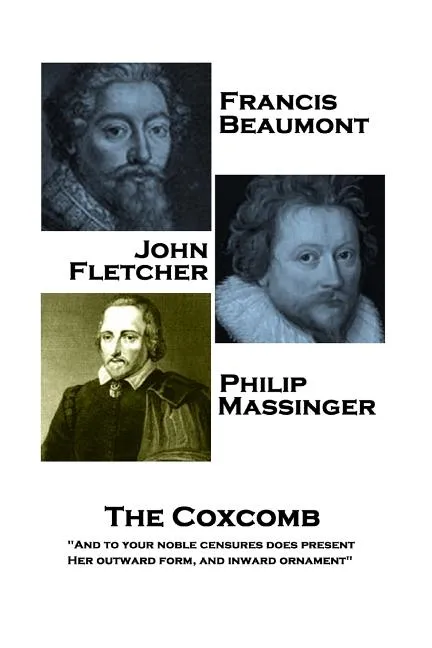
Francis Beaumont, JohnFletcher & Philip Massinger - The Coxcomb
"And to your noble censures does present, Her outward form, and inward ornament"
Report an issue
Tell us what's wrong and we'll take a look.
Thanks – we got it. We'll review and follow up if needed.
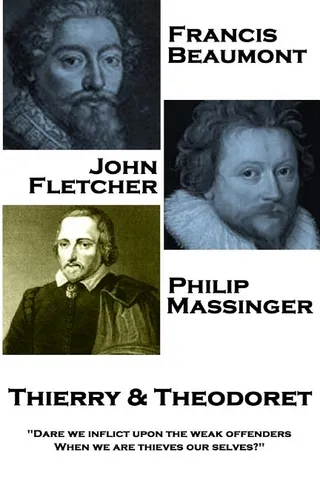
The English dramatists Francis Beaumont and John Fletcher, collaborated in their writing during the reign of James I of England (James VI of Scotland, 1567-1625; in England he reigned from 1603).Beaumont & Fletcher began to collaborate as writers soon after they met. After notable failures of their solo works their first joint effort, Philaster, was a success and tragicomedy was the genre they explored and built upon. There would be many further successes to follow. There is an account that at the time the two men shared everything. They lived together in a house on the Bankside in Southwark, "they also lived together in Bankside, sharing clothes and having one wench in the house between them." Or as another account puts it "sharing everything in the closest intimacy." Whatever the truth of this they were now recognised as perhaps the best writing team of their generation, so much so, that their joint names was applied to all the works in which either, or both, had a pen including those with Philip Massinger, James Shirley and Nathan Field.The first Beaumont and Fletcher folio of 1647 contained 35 plays; 53 plays were included in the second folio in 1679. Other works bring the total plays in the canon to about 55. However there appears here to have been some duplicity on the account of the publishers who seemed to attribute so many to the team. It is now thought that the work between solely by Beaumont and Fletcher amounts to approximately 15 plays, though of course further works by them were re-worked by others and the originals lost. After Beaumont's early death in 1616 Fletcher continued to write and, at his height was, by many standards, the equal of Shakespeare in popularity until his own death in 1625.Philip Massinger worked several times with Beaumont & Fletcher and many times with Fletcher after Beaumont's death. Whilst he too collaborated with various other playwrights he also has approximately 16 plays to his solo credit though most of these were lost when used by a kitchen cook to start a fire.Index of ContentsDRAMATIS PERSONAETHE SCENE: England, France.THE COXCOMBPROLOGUEACTUS PRIMUSSCÆNA PRIMAACTUS SECUNDUSSCÆNA PRIMAACTUS TERTIUSSCÆNA PRIMAACTUS QUARTUSSCÆNA PRIMAACTUS QUINTUSSCÆNA PRIMAEPILOGUEFRANCIS BEAUMONT - A SHORT BIOGRAPHYJOHN FLETCHER - A SHORT BIOGRAPHYPHILIP MASSINGER - A SHORT BIOGRAPHYFRANCIS BEAUMONT & JOHN FLETCHER - A CONCISE BIBLIOGRAPHYPHILIP MASSINGER - A CONCISE BIBLIOGRAPHY
John Fletcher
John Fletcher (1579-1625) was an English dramatist who collaborated with Francis Beaumont on at least six plays. They began working together in about 1607 and had their first success in 1609 with Philaster; or Love Lies Bleeding.
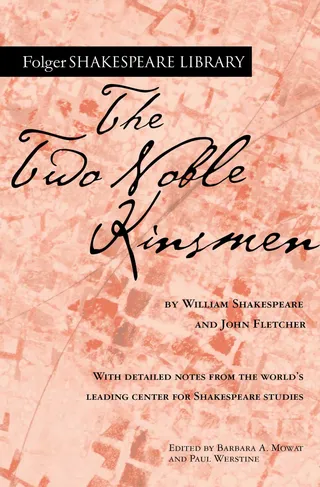
After Beaumont's retirement in 1613, Fletcher became chief playwright for the King's Men; in addition to writing his own plays, he apparently collaborated with Shakespeare on three works: Two Noble Kinsmen, Henry VIII, and a lost play, The History of Cardenio. He also collaborated with Nathan Field, William Rowley and Philip Massinger, who succeeded him to the post of the King's Men's playwright in 1625.
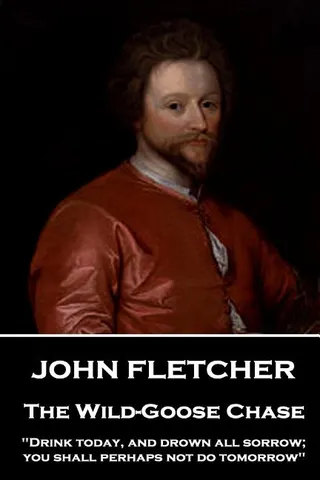
His own plays include the pastoral The Faithful Shepherdess (1608), the tragedy Bonduca (1613), and the comedies Wit Without Money (1614), The Wild Goose Chase (1621), and The Chances (1625), which was revived at the Chichester Festival Theatre in 1962. His work remained enormously popular until the end of the 17th century.
More by John Fletcher







Why Readwise Books?
Readwise Books is an ebook & audiobook platform that automatically logs how much you and your friends read, making it fun and easy to read more. Learn more →