Report an issue
Tell us what's wrong and we'll take a look.
Thanks – we got it. We'll review and follow up if needed.
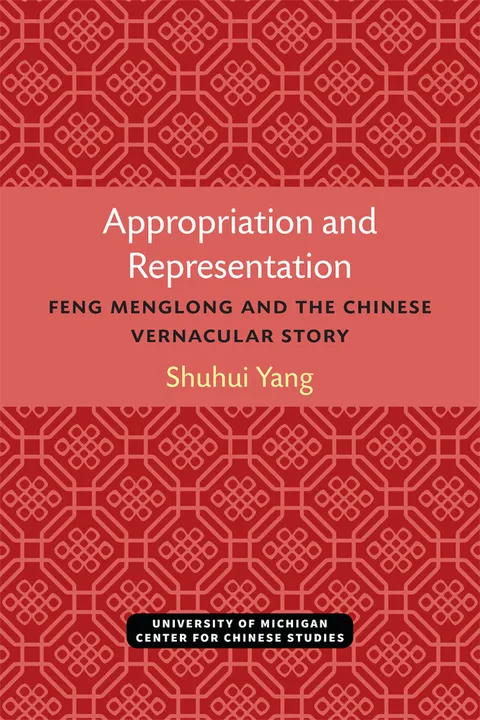
Feng Menglong (1574-1646) was recognized as the most knowledgeable connoisseur of popular literature of his time. He is known today for compiling three famous collections of vernacular short stories, each containing forty stories, collectively known as Sanyan. Appropriation and Representation adapts concepts of ventriloquism and dialogism from Bakhtin and Holquist to explore Feng's methods of selecting source materials. Shuhui Yang develops a model of development in which Feng's approach to selecting and working with his source materials becomes clear. More broadly, Appropriation and Representation locates Feng Menglong's Sanyan in the cultural milieu of the late Ming, including the archaist movement in literature, literati marginality and anxieties, the subversive use of folk works, and the meiren xiangcao tradition--appropriating a female identity to express male frustration. Against this background, a rationale emerges for Feng's choice to elevate and promote the vernacular story while stepping back form an overt authorial role.
Shuhui Yang
Shuhui Yang is professor of Chinese at Bates College, Lewiston, Maine. He is cotranslator of the renowned 3-volume set of vernacular Ming stories by Feng Menglong (1574-1646) known as the Sanyan: Stories Old and New, Stories to Caution the World, and Stories to Awaken the World (University of Washington Press, 2000-2009).


Why Readwise Books?
Readwise Books is an ebook & audiobook platform that automatically logs how much you and your friends read, making it fun and easy to read more. Learn more →