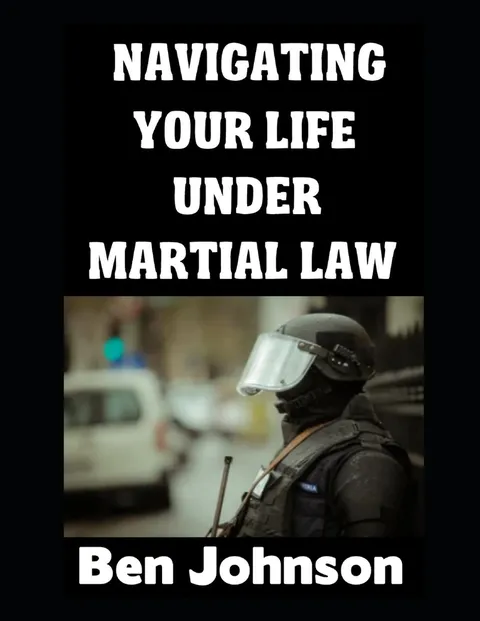
Navigating Your Life Under Martial Law
Report an issue
Tell us what's wrong and we'll take a look.
Thanks – we got it. We'll review and follow up if needed.
Martial law is a state of emergency where military authorities take control of civilian functions, essentially replacing civilian government structures with military oversight. It's different from the regular state of emergency because it grants military commanders broad powers to manage day-to-day life. It's more extreme and invasive, touching everything from law enforcement to the judicial system, and in some cases, even the media.
What you might not realize is that martial law is not something that's just imposed by military governments; it can happen in countries with fully functioning civilian governments as well, often in response to significant unrest or perceived threats to national security. This isn't limited to wars either. It could be declared in situations involving natural disasters, civil disturbances, or even large-scale protests if authorities believe the civilian government is unable to maintain order.
The way martial law is declared varies from country to country, but generally, it's a decision made by the highest levels of government or the military. In the United States, for example, the President has the authority to declare martial law, though this has only happened a handful of times in the country's history. Usually, it's activated in response to specific crises, but it could also be declared proactively if the government deems it necessary to preserve order or control.
What's interesting, and often unsettling, is the level of power that gets handed over to military authorities once martial law is declared. It's not just about soldiers patrolling the streets. It's about how the military takes on roles that civilians normally handle - things like policing, enforcing curfews, and even restricting freedoms of movement and speech. Think of it like a shift from the rule of law to the rule of the military. In a country like the United States, where civil liberties are a fundamental part of daily life, this can feel like a total upheaval.
Another thing that's important to note is that martial law doesn't always last forever. It's intended to be a temporary measure. But temporary can be a subjective term. Sometimes, martial law can last for weeks, months, or even longer, depending on the situation and how well it is controlled. If a country or region is under martial law for an extended period, people can start to adapt to the new normal, but that doesn't mean they're okay with it. The uncertainty, the feeling of living under constant surveillance or restriction - it can wear on a population in ways that you might not expect. It's one thing to read about it in a history book, but another to live it out day after day.
When martial law is declared, one of the first things that typically happens is the suspension of certain rights. In some countries, things like the right to assembly, freedom of speech, and even the right to a fair trial can be restricted. The military may assume control over all aspects of daily life, from transportation to communication, and in extreme cases, martial law can involve the suspension of elections or civilian governance structures. The legal and political implications are significant because it shifts the balance of power, sometimes permanently altering how a country operates.
Benjamin Johnson
Ben Johnson serves as the CEO of 10/40 Hope, a missions organization committed to equipping and sending workers to the world's least-reached regions. He lived and ministered in Lebanon for nearly a decade, partnering with local churches, discipling young leaders, and forming deep relationships throughout the Middle East. During that time he met and married his wife, Patricia Hazim, who is Lebanese. Together they are raising four children--Zoey, Kye, Seth, and Hailey--and share a deep passion for God's work in the Arab world.
A preacher, teacher, and strategist, Ben now focuses on building global partnerships, strengthening missionary teams, and helping churches cultivate a heart for the nations. His writing reflects his desire to see believers rooted in Scripture and engaged in God's global mission. Ben lives in the United States with his family.
More by Benjamin Johnson











Why Readwise Books?
Readwise Books is an ebook & audiobook platform that automatically logs how much you and your friends read, making it fun and easy to read more. Learn more →