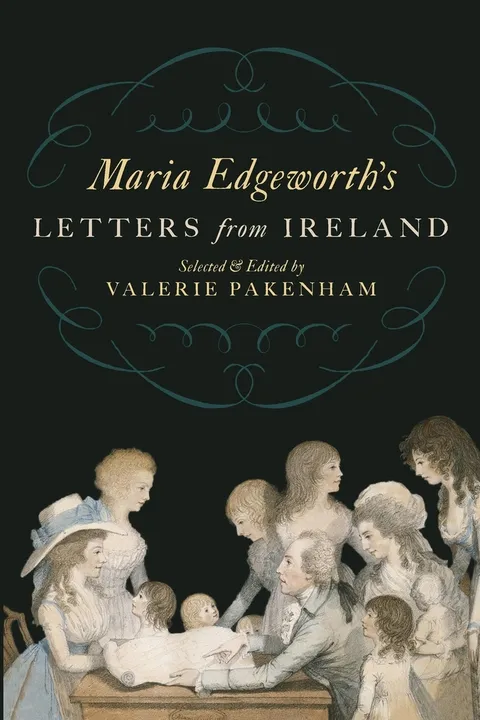
Maria Edgeworth's Letters From Ireland
Report an issue
Tell us what's wrong and we'll take a look.
Thanks – we got it. We'll review and follow up if needed.
1 January 2018 will be the 250th anniversary of Maria Edgeworth's birth. Valerie Pakenham's sparkling new selection of over four hundred letters, many hitherto unpublished, will help to celebrate her memory. Born in England, she was brought to live in Ireland at the age of fourteen and spent most of the rest of her life at the family home at Edgeworthstown, Co. Longford. Encouraged by her remarkable father, Richard Lovell Edgeworth, whose memoirs she edited, she became, in turn, famous for her children's stories, her practical guides to education and her novels - or, as she preferred to call them, 'Moral Tales'. By 1813, when visiting London, she was, as Byron testified, as great a literary lion as he had been the season before, and she was hugely admired by fellow novelists Sir Walter Scott and Jane Austen. Maria Edgeworth's posthumous fame has dwindled and only her first novel, Castle Rackrent (1800), a brilliant burlesque account of the Irish squirearchy, is still widely read. She was, however, a prolific and fascinating letter writer. She insisted that her letters were for private consumption only, but after her death, her stepmother and half-sisters produced a private memoir for friends using carefully selected extracts. Their literary quality was spotted by Augustus Hare, whose shortened version, The Life and Letters of Maria Edgeworth, appeared in 1894. In the 1970s Maria's great great niece, Christina Colvin edited Maria Edgeworth's Letters from England and Maria Edgeworth in France & Switzerland. No one, however, has revisited fully Maria's original letters from the place she loved and knew best: Ireland. From 1825, Maria's letters reflect sixty years of Irish history, from the heady days of Grattan's Parliament, through the perils of the 1798 Rebellion to the rise of O'Connell and the struggle for Catholic Emancipation. In old age, she worked actively to alleviate the Great Famine and wrote her last story to raise money aged 82. A treasure trove of stories, humour, local and high-level gossip, her letters show the extraordinary range of her interests: history, politics, literature and science. Maria almost single-handedly took over the management of her family estate and restored it to solvency. Her later letters brim with delight at these practical undertakings and her affection for the local people she worked with. Two of her half-sisters and her stepmother were gifted artists, and Valerie Pakenham has been able to use many of their unpublished drawings and sketches to illustrate this book.
Maria Edgeworth
Although born in England in 1768, Maria Edgeworth was raised in Ireland from a young age after the death of her mother. After nearly losing her sight at age fourteen, Edgeworth was tutored at home by her father, helping to run their estate and taking charge of her younger siblings. Over the course of her life she collaborated and published books with her father, and produced many more of her own adult and children’s works, including such classics as Castle Rackrent, Patronage, Belinda, Ormond and The Absentee. Edgeworth spent her entire life on the family estate, but kept up friendships and correspondences with her contemporaries Sir Walter Scott and Lord Byron, and her writing had a profound influence upon Jane Austen and William Makepeace Thackeray. Edgeworth was outspoken on the issues of poverty, women’s rights, and racial inequalities. During the beginnings of famine in Ireland, Edgeworth worked in relief and support of the sick and destitute. She died in 1849 at the age of 81.
More by Maria Edgeworth

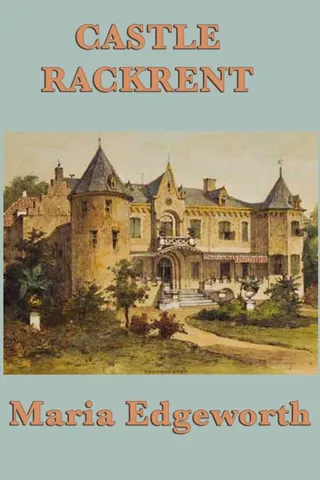




Why Readwise Books?
Readwise Books is an ebook & audiobook platform that automatically logs how much you and your friends read, making it fun and easy to read more. Learn more →