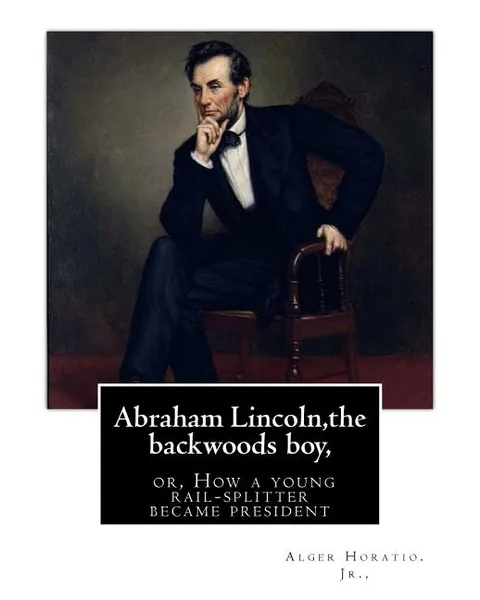
Abraham Lincoln, the backwoods boy;or, How a young rail-splitter became president
by Alger Horatio. Jr., (Original Classics)
Report an issue
Tell us what's wrong and we'll take a look.
Thanks – we got it. We'll review and follow up if needed.
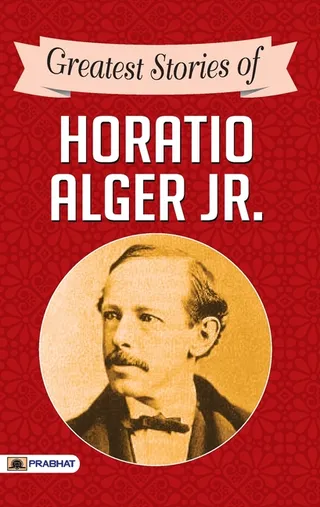
Horatio Alger Jr. ( January 13, 1832 - July 18, 1899) was a prolific 19th-century American author, best known for his many young-adult novels about impoverished boys and their rise from humble backgrounds to lives of middle-class security and comfort through hard work, determination, courage, and honesty. His writings were characterized by the "rags-to-riches" narrative, which had a formative effect on America during the Gilded Age. All of Alger's juvenile novels share essentially the same theme, known as the "Horatio Alger myth": a teenage boy works hard to escape poverty. Often it is not hard work that rescues the boy from his fate but rather some extraordinary act of bravery or honesty. The boy might return a large sum of lost money or rescue someone from an overturned carriage. This brings the boy-and his plight-to the attention of a wealthy individual. Alger secured his literary niche in 1868 with the publication of his fourth book, Ragged Dick, the story of a poor bootblack's rise to middle-class respectability. This novel was a huge success. His many books that followed were essentially variations on Ragged Dick and featured casts of stock characters: the valiant hard-working, honest youth, the noble mysterious stranger, the snobbish youth, and the evil, greedy squire. In the 1870s, Alger's fiction was growing stale. His publisher suggested he tour the American West for fresh material to incorporate into his fiction. Alger took a trip to California, but the trip had little effect on his writing: he remained mired in the tired theme of "poor boy makes good." The backdrops of these novels, however, became the American West rather than the urban environments of the northeastern United States. In the last decades of the 19th century, Alger's moral tone coarsened with the change in boys' tastes. Sensational thrills were wanted by the public. The Protestant work ethic had loosened its grip on America, and violence, murder, and other sensational themes entered Alger's works. Public librarians questioned whether his books should be made available to the young. They were briefly successful, but interest in Alger's novels was renewed in the first decades of the 20th century, and they sold in the thousands. By the time he died in 1899, Alger had published around a hundred volumes. He is buried in South Natick, Massachusetts. Since 1947, the Horatio Alger Association of Distinguished Americans has awarded scholarships and prizes to deserving individuals......
Horatio Alger
Horatio Alger Jr. was an American author best known for his young adult novels that focused on the themes of hard work, perseverance, and the rise from poverty to success. Born on January 13, 1832, in Chelsea, Massachusetts, he graduated from Harvard University and later attended Harvard Divinity School. Alger s works, primarily aimed at young readers, often centered around impoverished boys who, through good deeds, honesty, and tireless effort, rise to middle-class security and comfort. His most famous work, Ragged Dick, became an archetype of the rags-to-riches genre, emphasizing the importance of personal integrity and the belief that anyone, regardless of their social standing, could improve their circumstances with hard work and moral character. Alger s life, marked by his own struggles and hardships, mirrored many of the stories he wrote. Although his works fell out of favor in the 20th century, they were hugely popular during his lifetime and remain significant in the history of children s literature. Alger passed away on July 18, 1899, but his influence on American literature and the genre of juvenile fiction continues to be felt.
More by Horatio Alger





Why Readwise Books?
Readwise Books is an ebook & audiobook platform that automatically logs how much you and your friends read, making it fun and easy to read more. Learn more →