
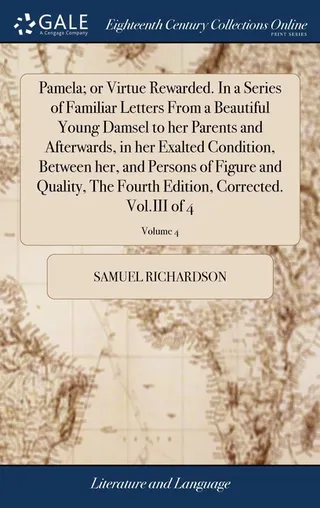
Pamela, or Virtue Rewarded
An Epistolary Novel of Desire, Class, and a Servant Girl's Resistance
Report an issue
Tell us what's wrong and we'll take a look.
Thanks – we got it. We'll review and follow up if needed.

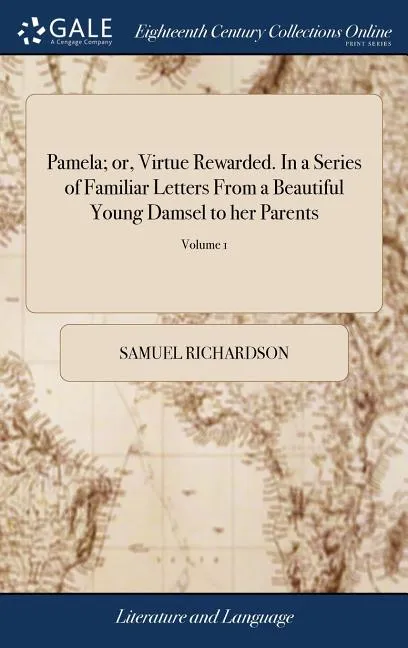
Her master controls her livelihood. She insists he cannot command her conscience.
First published in 1740, Samuel Richardson's Pamela, or Virtue Rewarded places a young servant's voice at the center of a struggle over desire, rank, and moral authority. Pamela Andrews faces persistent advances from her employer, Mr. B, who wants to make her his mistress. Under pressure and increasingly isolated, she records her fears, hopes, and determination in deeply personal letters.
The result is both an intimate story and a searching examination of unequal power. Pamela's resistance challenges the assumption that wealth and position confer a right to obedience, while Mr. B's changing conduct raises difficult questions about repentance and trust. A landmark in the development of the English novel, the book helped make private feeling and everyday experience central subjects of fiction. Its tensions between romantic reward and coercive authority still invite readers to argue, question, and reconsider.
What readers find inside:
- A servant's perspective - Pamela's account gives emotional weight to the concerns of a young woman whose security depends on others.
- Intimate letters - The epistolary form brings readers close to the heroine's changing thoughts and immediate anxieties.
- Class and dependence - The relationship between maid and master exposes the personal consequences of social hierarchy.
- Resistance and conviction - Pamela defends her principles against sustained pressure from a man with greater power.
- Repentance and reward - The story asks how character can be judged and whether changed behavior can earn trust.
For readers of classic English fiction, lovers of novels told through letters, and anyone interested in the literary history of women's agency, this is a compelling encounter with a work that helped shape the novel.
Enter Pamela's correspondence and consider for yourself what it means to hold firm when the balance of power is against you.





Why Readwise Books?
Readwise Books is an ebook & audiobook platform that automatically logs how much you and your friends read, making it fun and easy to read more. Learn more →