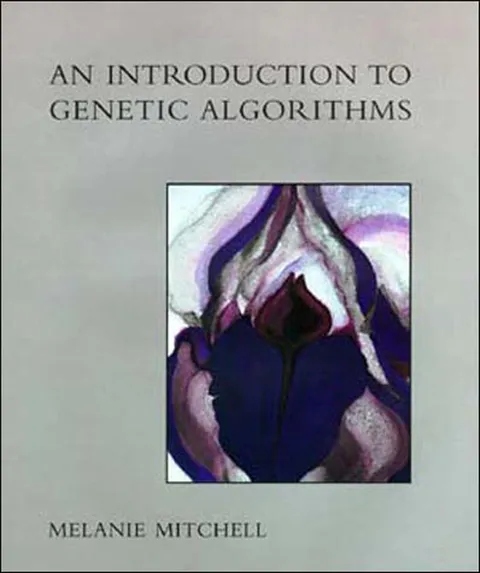
An Introduction to Genetic Algorithms
Report an issue
Tell us what's wrong and we'll take a look.
Thanks – we got it. We'll review and follow up if needed.
The descriptions of applications and modeling projects stretch beyond the strict boundaries of computer science to include dynamical systems theory, game theory, molecular biology, ecology, evolutionary biology, and population genetics, underscoring the exciting "general purpose" nature of genetic algorithms as search methods that can be employed across disciplines.
An Introduction to Genetic Algorithms is accessible to students and researchers in any scientific discipline. It includes many thought and computer exercises that build on and reinforce the reader's understanding of the text. The first chapter introduces genetic algorithms and their terminology and describes two provocative applications in detail. The second and third chapters look at the use of genetic algorithms in machine learning (computer programs, data analysis and prediction, neural networks) and in scientific models (interactions among learning, evolution, and culture; sexual selection; ecosystems; evolutionary activity). Several approaches to the theory of genetic algorithms are discussed in depth in the fourth chapter. The fifth chapter takes up implementation, and the last chapter poses some currently unanswered questions and surveys prospects for the future of evolutionary computation.
Melanie Mitchell
Melanie Mitchell has a Ph.D. in computer science from the University of Michigan, where she studied with the cognitive scientist and writer Douglas Hofstadter; together, they created the Copycat program, which makes creative analogies in an idealized world. The author or editor of several books (such as Complexity: A Guided Tour) and numerous scholarly papers, Mitchell is currently professor of computer science at Portland State University and external professor at the Santa Fe Institute.
More by Melanie Mitchell


Why Readwise Books?
Readwise Books is an ebook & audiobook platform that automatically logs how much you and your friends read, making it fun and easy to read more. Learn more →