Report an issue
Tell us what's wrong and we'll take a look.
Thanks – we got it. We'll review and follow up if needed.
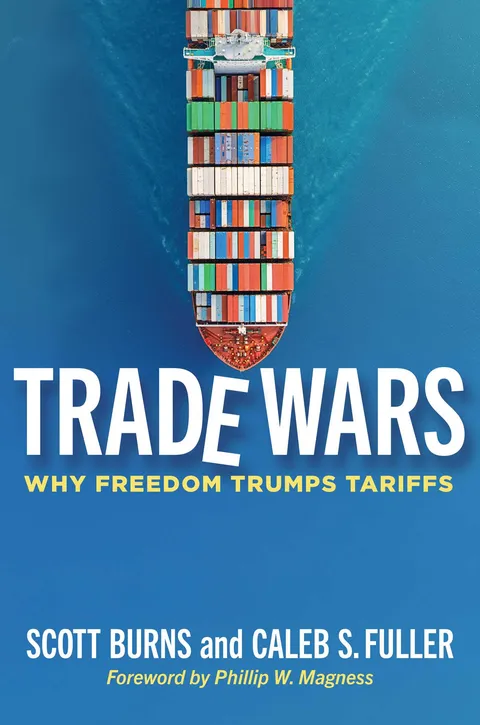
Civilization was built on trade, and without it nations decline and fall. Is America next?
"Trade wars."
This phrase dominates the headlines, elections, and political debates of our time.
But what, exactly, is a "trade war"?
Who pays the price when governments impose tariffs? And why have virtually all economists, from Adam Smith to today’s economists, so consistently defended free trade?
In Trade Wars, economists Scott A. Burns and Caleb S. Fuller cut through the rhetoric to explain one of the most misunderstood subjects in public life. Beginning with the simple insight that people trade because it makes them better off, they show how exchange, specialization, and cooperation transformed humanity from bare survival to modern prosperity. Readers will learn why trade is about far more than imports and exports: it is a cornerstone of human freedom, innovation, and peaceful cooperation.
Written for general readers, students, and policymakers alike, this primer offers a timely and compelling defense of one of civilization's greatest achievements: the freedom to choose our own trading partners.
Scott A Burns
Scott A. Burns is a research fellow at the Independent Institute and an Associate Professor of Economics at Southeastern Louisiana University in the Department of Management and Business Administration.
Caleb S. Fuller
Caleb S. Fuller is a Research Fellow at the Independent Institute and Associate Professor of Economics at Grove City College. He has published papers in Public Choice, the International Review of Law and Economics, the European Journal of Law and Economics, the Review of Austrian Economics, and others. He is the author of the book No Free Lunch: Six Economic Lies You’ve Been Taught and Probably Believe.


Why Readwise Books?
Readwise Books is an ebook & audiobook platform that automatically logs how much you and your friends read, making it fun and easy to read more. Learn more →