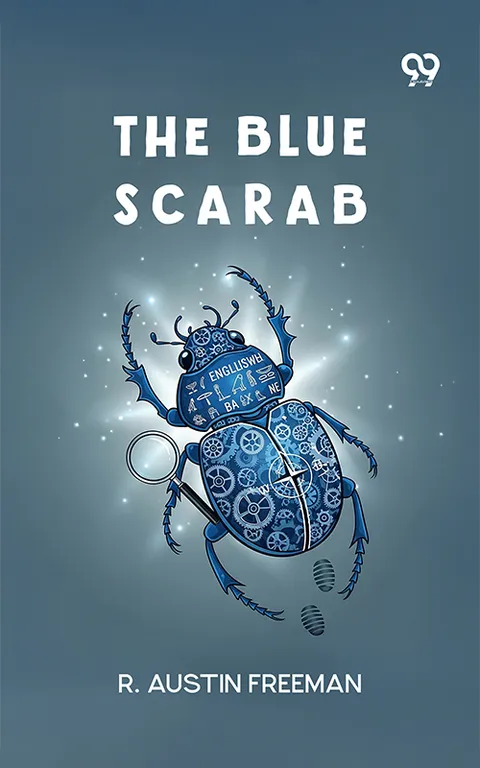
The Blue Scarab
Report an issue
Tell us what's wrong and we'll take a look.
Thanks – we got it. We'll review and follow up if needed.
The blue scarab explores how a seemingly trivial theft reveals layers of historical secrecy, intellectual precision, and cryptic knowledge. In a world typically dominated by brutal and predictable crimes, the arrival of a strange case involving a missing artifact offers a momentary departure. At the centre, lies a curious object—a blue scarab—taken from a locked box during a suspiciously timed fire. What elevates the incident from mere theft is the recovery of every other item except the scarab, returned in a parcel bearing an enigmatic seal covered in hieroglyphs. Attention is drawn to the investigator’s capacity to isolate essential details immediately and to summon obscure, precise knowledge from unrelated fields. The scarab’s origin is layered in family legend involving war, gambling, and the unexplained disappearance of valuable jewels. Doubt surrounds its material worth, but its symbolic and historical significance remains potent. Each element of the case—the letter, the seal, the family tale—converges not toward a solution through force, but through interpretation and perception. This makes the case stand apart as an intellectual puzzle where the missing object may hold truths long buried under mistrust, silence, and time.
R. Austin Freeman
R. Austin Freeman (1862–1943) was a British author of detective stories. A pioneer of the inverted detective story, in which the reader knows from the start who committed the crime, Freeman is best known as the creator of the “medical jurispractitioner” Dr. John Thorndyke. First introduced in The Red Thumb Mark (1907), the brilliant forensic investigator went on to star in dozens of novels and short stories over the next decades.
More by R. Austin Freeman






Why Readwise Books?
Readwise Books is an ebook & audiobook platform that automatically logs how much you and your friends read, making it fun and easy to read more. Learn more →