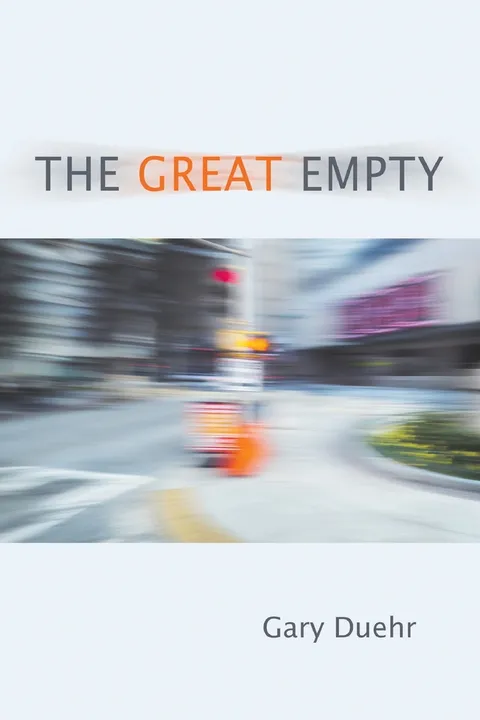
The Great Empty
Report an issue
Tell us what's wrong and we'll take a look.
Thanks – we got it. We'll review and follow up if needed.
During the first year of the pandemic, I wrote one poem a day and posted them on Facebook and Instagram, as a way to provide a historical diary of the times and to connect to a larger community in the midst of isolation. The poems are influenced by classic haiku images as well, such as falling snow, the trill of birds, and intimate daily life. The scope of the verse ranges from mundane observations to the larger political sphere, even touching on the 1918 flu epidemic. The Great Empty is written in renga, a style of ancient Japanese verse like an extended haiku. The end of one poem links to the start of the next, as when they were created as a party game.
Gary Duehr
Based in Boston, Gary Duehr teaches writing for local universities. His MFA is from the University of Iowa Writers Workshop. In 2001 he received an NEA Poetry Fellowship, and he has also received grants from the Massachusetts Cultural Council, the LEF Foundation, and the Rockefeller Foundation. His books of poetry include Point Blank (In Case of Emergency Press), Winter Light (Four Way Books) and Where Everyone Is Going To (St. Andrews College Press). His children's book in verse is Felicia the Ferret and the Atom Smasher (Thurston Howl Publications). His short stories have appeared in numerous journals, and his plays have been presented by Boston Playwrights' Theatre in Boston and by the Equity Library Play Festival in New York.
More by Gary Duehr


Why Readwise Books?
Readwise Books is an ebook & audiobook platform that automatically logs how much you and your friends read, making it fun and easy to read more. Learn more →