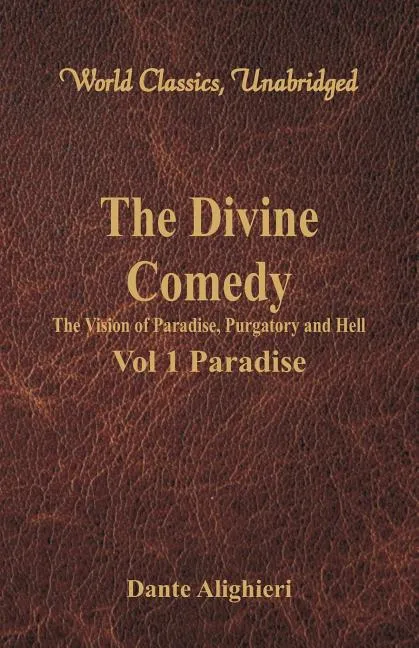
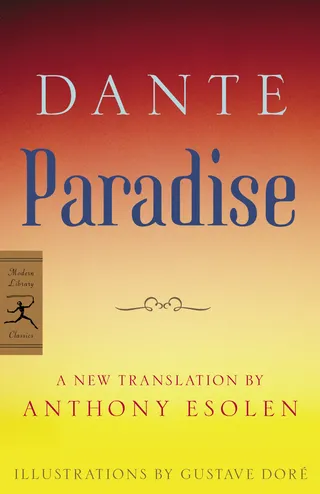
The Divine Comedy - The Vision of Paradise, Purgatory and Hell - Vol 1 Paradise (World Classics, Unabridged)
Report an issue
Tell us what's wrong and we'll take a look.
Thanks – we got it. We'll review and follow up if needed.
The Divine Comedy is an epic poem by Dante Alighieri. It is widely considered the preeminent work of Italian literature and is seen as one of the greatest works of world literature. The poem's imaginative vision of the afterlife is representative of the medieval world-view as it had developed in the Western Church by the 14th century. It helped establish the Tuscan language, in which it is written, as the standardized Italian language. It is divided into three parts: Paradiso (Paradise), Purgatorio (Purgatory), and Inferno (Hell).
Dante Alighieri
Dante Alighieri, the Italian poet whose masterpiece The Divine Comedy has exerted a profound influence on Western thought, was born in Florence in 1265. He entered public life in 1295, later becoming one of the six governing magistrates of Florence. He repeatedly opposed the machinations of Pope Boniface VIII, who was attempting to place all of Tuscany under Papal control, and in 1301 was banished from Florence on trumped-up charges. Dante would never enter his native city again, spending his remaining years with a series of patrons in various courts in Italy. He completed The Divine Comedy shortly before his death in 1321.
More by Dante Alighieri




Why Readwise Books?
Readwise Books is an ebook & audiobook platform that automatically logs how much you and your friends read, making it fun and easy to read more. Learn more →