Report an issue
Tell us what's wrong and we'll take a look.
Thanks – we got it. We'll review and follow up if needed.
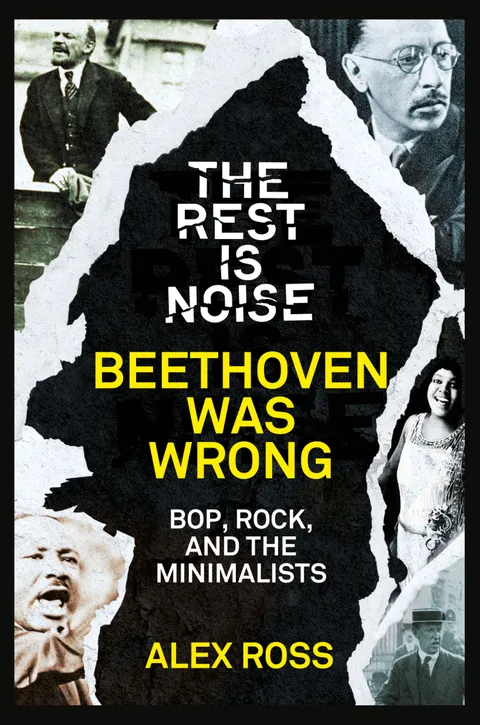
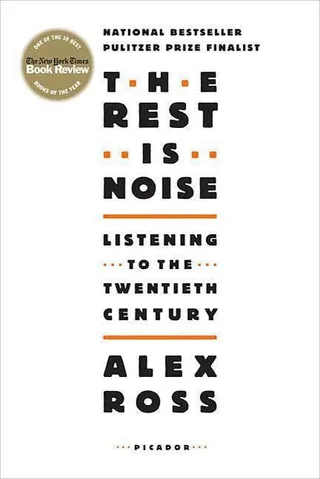
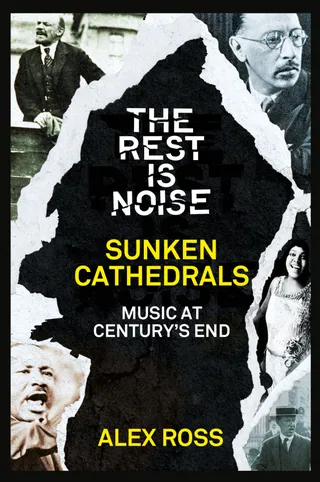
This is a chapter from Alex Ross’s groundbreaking history of twentieth-century classical music, ‘The Rest is Noise’. Further extracts are available as digital shorts, accompanying the London Southbank festival programme.
After Paul McCartney listened to the electronic layering and looping of Stockhausen, the Beatles used the same effects on Revolver’s ‘Tomorrow Never Knows’ and put an image of the composer on Sgt. Pepper’s Lonely Hearts Club Band. For a split second during ‘Revolution 9’ the final chords of Sibelius’s Seventh Symphony can be heard. Even the most jaded veteran of twentieth century music must have been startled by the influence of the post-war avant-garde on the psychedelic generation.
Now a major festival running throughout 2013 at London’s Southbank, The Rest is Noise is an intricate commentary not just on the sounds that defined the century, but on art’s troublesome dance with politics, social and cultural change.
Alex Ross is the New Yorker’s music critic, and the winner of the Guardian First Book Award and the National Book Critics Circle Award for The Rest is Noise, which was also shortlisted for the Samuel Johnson and Pulitzer prizes for non-fiction.
Alex Ross
Alex Ross has been the music critic of The New Yorker since 1996. His first book, the international bestseller The Rest Is Noise: Listening to the Twentieth Century, was a finalist for the Pulitzer Prize and won a National Book Critics Circle Award. His second book, the essay collection Listen to This, received an ASCAP Deems Taylor Award. He was named a MacArthur Fellow in 2008 and a Guggenheim Fellow in 2015.
More by Alex Ross


Why Readwise Books?
Readwise Books is an ebook & audiobook platform that automatically logs how much you and your friends read, making it fun and easy to read more. Learn more →