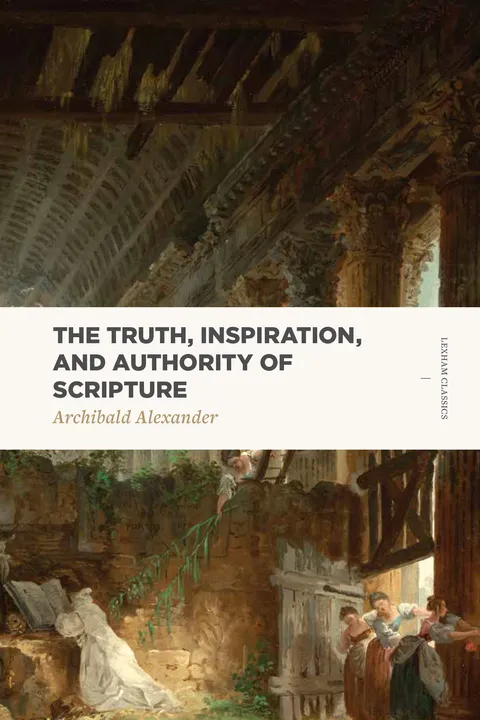
The Truth, Inspiration, and Authority of Scripture (Lexham Classics)
Report an issue
Tell us what's wrong and we'll take a look.
Thanks – we got it. We'll review and follow up if needed.
This book, originally published in 1836 as Evidences of the Authenticity, Inspiration, and Canonical Authority of Holy Scripture, contains Archibald Alexander's defense of God's role in the inspiration of Scripture. Alexander devotes time to defending the truth of Scripture, the veracity of miracles, the fulfillment of prophecy, and the credibility of the Gospels, firmly supporting the view that the revelation of God in the Bible is neither improbable nor unreasonable.
Lexham Classics are beautifully typeset new editions of classic works. Each book has been carefully transcribed from the original texts, ensuring an accurate representation of the writing as the author intended it to be read.
Archibald Alexander
Archibald Alexander was an American Presbyterian theologian and Princeton Theological Seminary professor. He was President of Hampden-Sydney College in Virginia for nine years and Princeton Theological Seminary's first professor for 39 years, from 1812 to 1851. Archibald Alexander was born on April 17, 1772, in South River, Rockbridge County, Virginia, as the son of William Alexander, a prosperous farmer. He was raised under the teaching and ministry of Presbyterian preacher William Graham (1745-1799), who had received theological training from John Witherspoon. His grandfather, who was of Scottish heritage, arrived in Pennsylvania from Ireland in 1736 and migrated to Virginia after two years. William, Archibald's father, was a farmer and businessman. His nephew was William Alexander Caruthers, an American novelist (1802-1846). On October 1, 1791, he was licensed to preach, ordained by the Hanover presbytery on June 9, 1794, and served as an itinerant pastor in Charlotte and Prince Edward counties for the next seven years. By the age of 21, Alexander had become a Presbyterian Church preacher.
More by Archibald Alexander


Why Readwise Books?
Readwise Books is an ebook & audiobook platform that automatically logs how much you and your friends read, making it fun and easy to read more. Learn more →