Report an issue
Tell us what's wrong and we'll take a look.
Thanks – we got it. We'll review and follow up if needed.
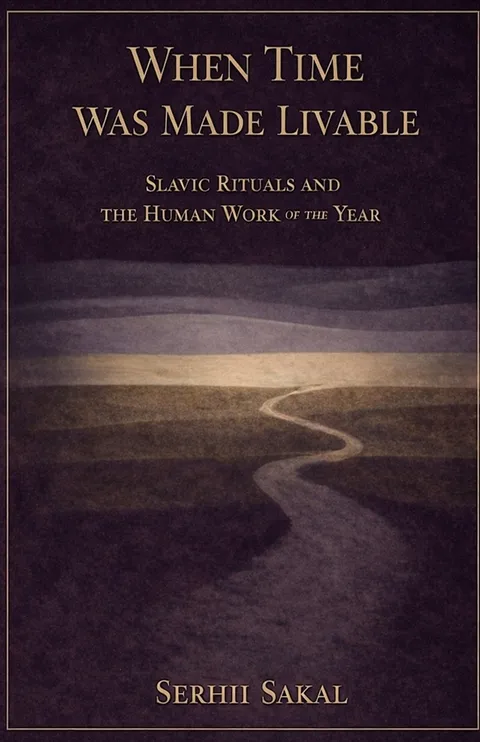
When Time Was Made Livable is a reflective exploration of Slavic seasonal rituals and the human needs they once served.
Before calendars and clocks governed daily life, time was experienced through cycles of labor, scarcity, growth, danger, and rest. Communities marked these pressures with recurring rituals-not as decoration, but as practical tools for endurance. These observances shaped when people paused, released tension, guarded what they had built, remembered the dead, and prepared for what came next.
Rather than cataloging holidays or reconstructing historical ceremonies, this book follows a seasonal structure-winter through autumn, silence through memory-to examine what these traditions did. Each chapter centers a shared human problem: surviving darkness, inviting renewal cautiously, containing excess, protecting abundance, accounting for what remains, and closing the year without collapse.
Drawing from East Slavic, Central European, and Balkan traditions, the book traces how older ritual patterns persisted even as Christian language layered over them. Fire became cleansing. Water became blessing. The cycle remained.
Written in quiet, grounded prose, When Time Was Made Livable is not a guide to modern observance and does not ask for a return to the past. It asks a simpler question: why did people need these rituals, and why do versions of them still echo in contemporary life?
This book is for readers interested in folklore, cultural history, seasonal living, and the psychology of ritual-especially those drawn to thoughtful, slow, human-scaled nonfiction.
Serhii Sakal
Serhii Sakal was born in Ukraine in 1987 and lives in the United States. He read the Ukrainian classics at school, as everyone there does, and came back to them as an adult in a country where they had not been read. His previous translations are Taras Shevchenko's The Artist, Lesya Ukrainka's The Forest Song and The Boyar's Wife, Osyp Turiansky's Beyond the Limits of Pain, Volodymyr Vynnychenko's Notes of a Snub-Nosed Mephistopheles, Andrii Chaikovsky's After His Sister, and Ivan Franko's For the Hearth.He translated this one because it is the second Shevchenko novella in this series, and because a book written under an order forbidding its author to write deserves to be read in more languages than one.
More by Serhii Sakal


Why Readwise Books?
Readwise Books is an ebook & audiobook platform that automatically logs how much you and your friends read, making it fun and easy to read more. Learn more →