Report an issue
Tell us what's wrong and we'll take a look.
Thanks – we got it. We'll review and follow up if needed.
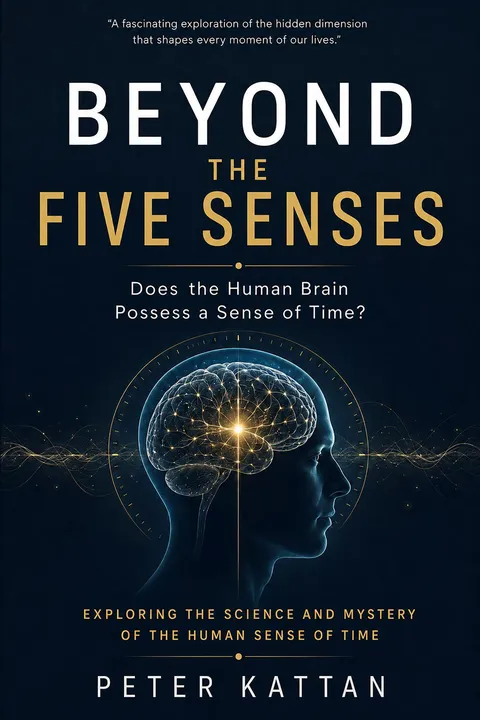
Can the human brain actually sense the passage of time?
Unlike sight, hearing, smell, taste, and touch, the perception of time has no obvious sensory organ. Yet every moment of our lives depends on our remarkable ability to estimate durations, recognize sequences of events, anticipate the future, and remember the past. How does the brain accomplish this extraordinary feat?
In this thought-provoking 38-page article, the author explores one of the most fascinating questions in modern neuroscience: Is there a biological basis for our sense of time? Drawing upon pioneering research by A. D. (Bud) Craig, Marc Wittmann, Warren Meck, and many other leading investigators, the article examines the emerging role of the insular cortex as a key brain region involved in subjective time perception and interoception-the brain's awareness of the body's internal physiological state.
The discussion reviews classical internal-clock theories, modern neuroscience of temporal perception, functional brain imaging studies, and the relationship between time, consciousness, emotion, memory, and bodily awareness. It also presents a new conceptual framework-the Temporal Integration Hypothesis-which proposes that the experience of time emerges from the continuous integration of changing physiological and neural information rather than from a single biological clock.
Written in a clear and accessible style, this article bridges neuroscience, psychology, physiology, and philosophy, making complex scientific ideas understandable to readers from a wide range of backgrounds. Whether you are a student, researcher, educator, or simply fascinated by the mysteries of the human mind, this concise review offers an engaging introduction to one of the most fundamental questions in science:
How does the brain create our experience of time?








Why Readwise Books?
Readwise Books is an ebook & audiobook platform that automatically logs how much you and your friends read, making it fun and easy to read more. Learn more →