Report an issue
Tell us what's wrong and we'll take a look.
Thanks – we got it. We'll review and follow up if needed.
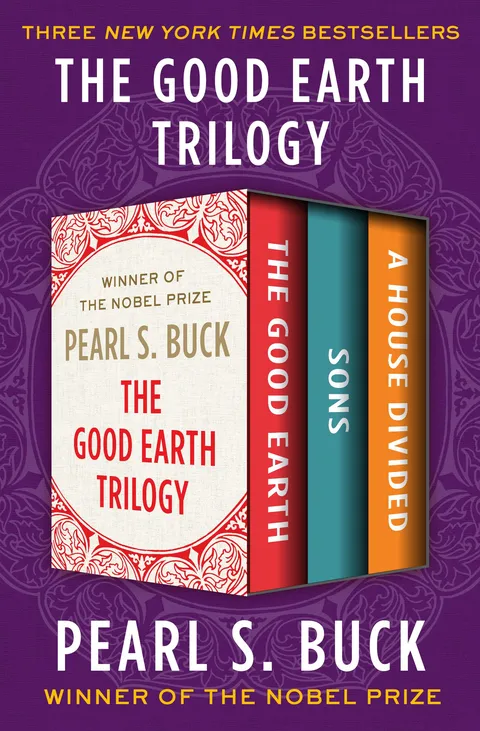
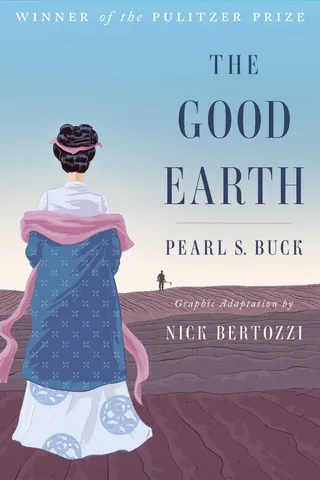
The New York Times–bestselling trilogy: A Pulitzer Prize–winning classic novel of China, together with its two sequels—by the Nobel Prize winner. The Good Earth: With luck and hard work, Chinese peasant farmer Wang Lung and his wife O-lan, a former slave, improve their fortune. They have sons and save steadily until one day they can afford to buy property in the House of Wang—the very house in which O-lan used to work. But success brings new problems. Wang soon finds himself the target of jealousy, and as good harvests come and go, so does the social order. Will Wang's family cherish the estate after he's gone? Sons: Revolution is sweeping through China. Wang Lung is on his deathbed and his three sons stand ready to inherit his hard-won estate. One son has taken the family's wealth for granted and become a landlord; another is a thriving merchant and moneylender; the youngest, an ambitious general, is destined to be a leader in the country. Through all his life's changes, Wang did not anticipate that each son would hunger to sell his beloved land for maximum profit. A House Divided: On the eve of a popular rebellion, the Chinese government starts to crack down in cities across the country. Fleeing the turmoil, Wang Yuan, the son of a famous general and grandson of the patriarch of The Good Earth, leaves for America to study agriculture. When he returns to China six years later, he encounters a nation still in the grip of violent uprisings. Unprepared for the social upheaval, Wang is torn by the tensions between old traditions and new ways, and by his formidable family, whose struggles he hopes to solve.
Pearl S. Buck
Pearl S. Buck (1892–1973) was a bestselling and Nobel Prize–winning author. Her classic novel The Good Earth (1931) was awarded a Pulitzer Prize and William Dean Howells Medal. Born in Hillsboro, West Virginia, Buck was the daughter of missionaries and spent much of the first half of her life in China, where many of her books are set. In 1934, civil unrest in China forced Buck back to the United States. Throughout her life she worked in support of civil and women’s rights, and established Welcome House, the first international, interracial adoption agency. In addition to her highly acclaimed novels, Buck wrote two memoirs and biographies of both of her parents. For her body of work, Buck received the Nobel Prize for Literature in 1938, the first American woman to have done so. She died in Vermont.
More by Pearl S. Buck




Why Readwise Books?
Readwise Books is an ebook & audiobook platform that automatically logs how much you and your friends read, making it fun and easy to read more. Learn more →