
Report an issue
Tell us what's wrong and we'll take a look.
Thanks – we got it. We'll review and follow up if needed.
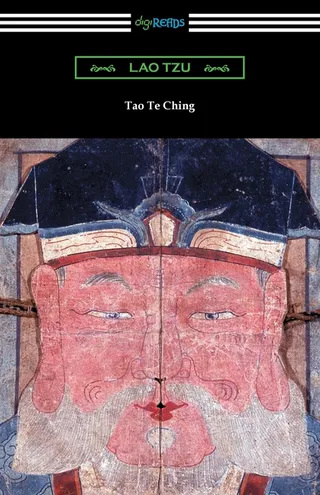
Tao Te Ching is a classic Chinese text, probably from around the 6th century BC. While the authorship is still debated, most of the text is attributed to Lao-Tzu ("Old Master"), who was a court record keeper during the Zhou Dynasty. The text is considered an essential element of Taoist philosophy as well as having significant influences on Chinese religions, including Buddhism. This is a classic translation of the book by James Legge. Visit www.ArcManor.com for other, similar books.
Lao Tse
Moss Roberts is Professor of Chinese at New York University. He has translated the classic novel Three Kingdoms, published by UC Press in both unabridged and abridged editions. He is also the editor and translator of Chinese Fairy Tales and Fantasies.
More by Lao Tse
James Legge
Translated by
James Legge was a Scottish linguist, missionary, sinologist, and translator, born on 20 December 1815 in Huntly, Aberdeenshire. He enrolled at Aberdeen Grammar School at age 13 and then King's College, Aberdeen at 15. After studying at Highbury Theological College in London, he went in 1839 as a missionary to the Chinese, but as China was not yet open to Europeans, he remained at Malacca for three years, in charge of the Anglo-Chinese College there. The College was subsequently moved to Hong Kong, where Legge lived for thirty years. Impressed with the necessity of missionaries being able to comprehend the ideas and culture of the Chinese, he began in 1841 a translation of the Chinese classics - a monumental task he completed a few years before his death. He later became the first Professor of Chinese at Oxford University and is regarded as probably the most important sinologist of the nineteenth century. He was the first recipient of the prestigious Julien Prize for sinology in 1875, and in 1894 became the first person other than a member of the British royal family to be depicted on a Hong Kong postage stamp. University of EdinburghAnyone who has glanced at Legge's translations and commentaries will be immediately struck by his vast learning, his meticulous attention to detail, his commitment to faithfulness to the original, and his critical acumen. Despite his Christian convictions, he strove with all his might to represent to Western readers the meaning of the ancient Chinese writers as accurately and fairly as possible. He died in Oxford on 29 November 1897, aged 81.


Why Readwise Books?
Readwise Books is an ebook & audiobook platform that automatically logs how much you and your friends read, making it fun and easy to read more. Learn more →