
Notes from the Underground
Report an issue
Tell us what's wrong and we'll take a look.
Thanks – we got it. We'll review and follow up if needed.
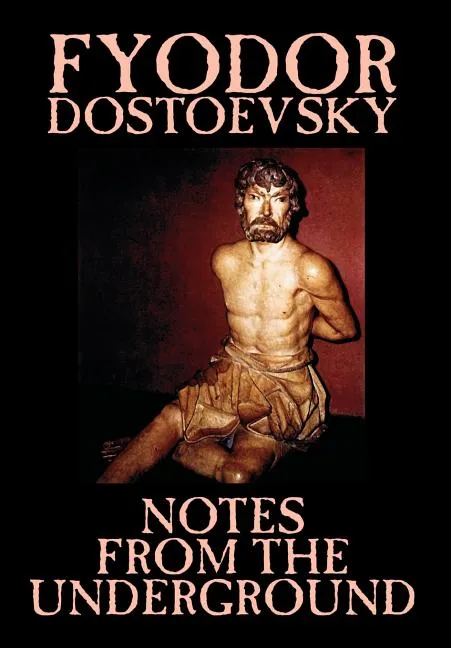
A philosophical debate about human nature and life in a technological civilization in the form of the diary of a fictional civil servant, this 1864 novel is considered the foundational work of existentialist literature. Punishing himself through his refusal to seek medical treatment for his pain, the embittered, nameless narrator engages in what appears to be an attempt to prove to himself that human happiness can never be possible because people are too stubbornly individualistic not to assert themselves, even in wicked ways. One of the must-reads from Russian novelist FYODOR MIKHAILOVICH DOSTOEVSKY (1821-1881), this trailblazing work of modern literature offers a vital basis for understanding much of contemporary philosophy and pop culture, from Jean-Paul Sartre and Friedrich Nietzsche to Taxi Driver and American Psycho, all of which have taken inspiration from this extraordinary work.
Fyodor Dostoyevsky
Fyodor Dostoyevsky is considered one of the greatest novelists of all time. Born in Moscow in 1821, he began adulthood by resigning a commission as a military engineer to embark on a writing career. The praise he earned for his first novel, Poor Folk, immediately vaulted him to literary stardom. His political activity led to imprisonment, a mock execution, and exile to a Siberian prison camp, all of which shaped his later novels. Since his death in 1881, he has been best remembered for his novels Crime and Punishment and The Brothers Karamazov.
More by Fyodor Dostoyevsky












Why Readwise Books?
Readwise Books is an ebook & audiobook platform that automatically logs how much you and your friends read, making it fun and easy to read more. Learn more →