Report an issue
Tell us what's wrong and we'll take a look.
Thanks – we got it. We'll review and follow up if needed.
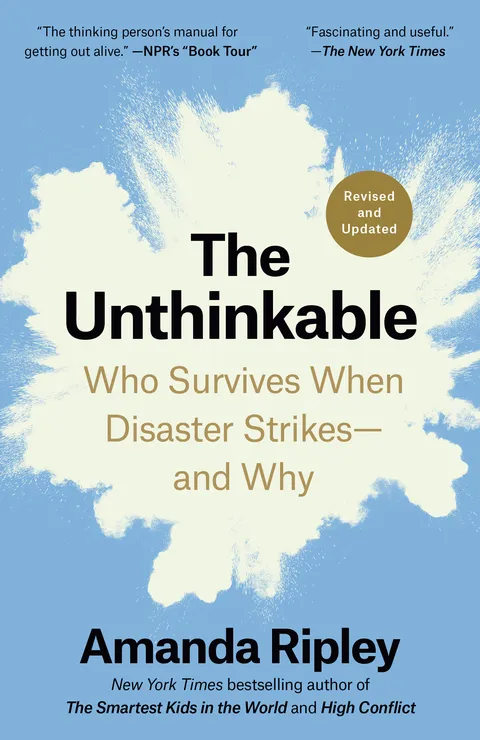
Discover how human beings react to danger—and what makes the difference between life and death
“Fascinating and useful . . . [shows that] the most important variable in an emergency is your own behavior.”—The New York Times
Today, nine out of ten Americans live in places at significant risk of earthquakes, hurricanes, tornadoes, terrorism, or other disasters. Tomorrow, some of us will have to make split-second choices to save ourselves and our families. How will we react? What will it feel like? Will we be heroes or victims?
In her quest to answer these questions, award-winning journalist Amanda Ripley traces human responses to some of recent history’s epic disasters, from the explosion of the Mont Blanc munitions ship in 1917–one of the biggest explosions before the invention of the atomic bomb–to the journeys of the 15,000 people who found their way out of the World Trade Center on September 11, 2001. To understand the science behind the stories, Ripley turns to leading brain scientists, trauma psychologists, and other disaster experts. She even has her own brain examined by military researchers and experiences, through realistic simulations, what it might be like to survive a plane crash into the ocean or to escape a raging fire.
Ripley comes back with precious wisdom about the surprising humanity of crowds, the elegance of the brain’s fear circuits, and the stunning inadequacy of many of our evolutionary responses. Most unexpectedly, she discovers the brain’s ability to do much, much better–with just a little help.
Amanda Ripley
Amanda Ripley is the New York Times bestselling author of The Smartest Kids in the World, High Conflict, and The Unthinkable. She writes for The Atlantic, Politico, The Washington Post, The New York Times, and The Wall Street Journal, among other publications.
More by Amanda Ripley


Why Readwise Books?
Readwise Books is an ebook & audiobook platform that automatically logs how much you and your friends read, making it fun and easy to read more. Learn more →