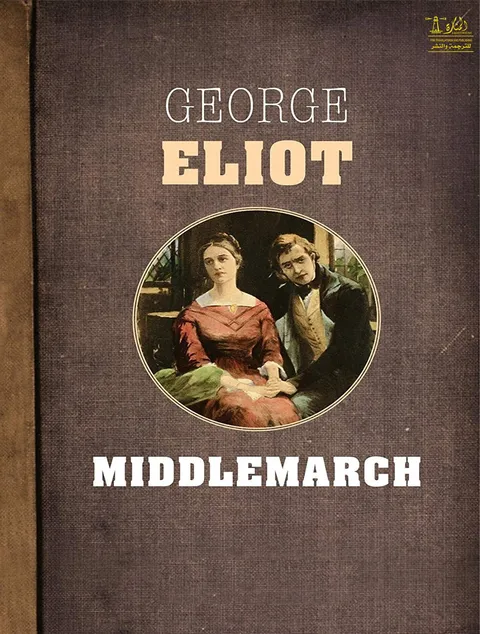
Middlemarch a study of provincial life
Report an issue
Tell us what's wrong and we'll take a look.
Thanks – we got it. We'll review and follow up if needed.
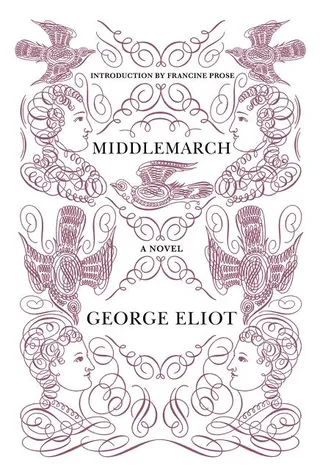
Taking place in the years leading up to the First Reform Bill of 1832, Middlemarch explores nearly every subject of concern to modern life: art, religion, science, politics, self, society, human relationships. Among her characters are some of the most remarkable portraits in English literature: Dorothea Brooke, the heroine, idealistic but naive; Rosamond Vincy, beautiful and egoistic: Edward Casaubon, the dry-as-dust scholar: Tertius Lydgate, the brilliant but morally-flawed physician: the passionate artist Will Ladislaw: and Fred Vincey and Mary Garth, childhood sweethearts whose charming courtship is one of the many humorous elements in the novel's rich comic vein.
George Eliot, pseudonym of Mary Ann, or Marian, Cross, née Evans, (born November 22, 1819, Chilvers Coton, Warwickshire, England—died December 22, 1880, London), English Victorian novelist who developed the method of psychological analysis characteristic of modern fiction. Her major works include Adam Bede (1859), The Mill on the Floss (1860), Silas Marner (1861), Middlemarch (1871–72), and Daniel Deronda (1876)
Early years
Evans was born on an estate of her father’s employer. She went as a boarder to Mrs. Wallington’s School at Nuneaton (1828–32), where she came under the influence of Maria Lewis, the principal governess, who inculcated a strong evangelical piety in the young girl. At her last school (1832–35), conducted by the daughters of the Baptist minister at Coventry, her religious ardour increased. She dressed severely and engaged earnestly in good works. The school gave her a reading knowledge of French and Italian, and, after her mother’s death had compelled her to return home to keep house for her father, he let her have lessons in Latin and German. In 1841 she moved with her father to Coventry.
There she became acquainted with a prosperous ribbon manufacturer, Charles Bray, a self-taught freethinker who campaigned for radical causes. His brother-in-law, Charles Hennell, was the author of An Inquiry Concerning the Origin of Christianity (1838), a book that precipitated Evans’s break with orthodoxy that had been long in preparation. Various books on the relation between the Bible and science had instilled in her keen mind the very doubts they were written to dispel. In 1842 she told her father that she could no longer go to church. The ensuing storm raged for several months before they reached a compromise, leaving her free to think what she pleased so long as she appeared respectably at church, and she lived with him until his death in 1849.
She spent the winter of 1849–50 at Geneva, reading extensively while living with the family of François D’Albert Durade, who painted a portrait of her. Like those by Mrs. Bray (1842) and Sir Frederic Burton (1865), all in the National Portrait Gallery, it shows her with light brown hair, gray-blue eyes, and a very fair complexion. Returning to Coventry, she spent the rest of 1850 with the Brays, pondering how to live on the £100 a year left by her father. After John Chapman, the publisher of The Life of Jesus Critically Examined, got her a chance to review R.W. Mackay’s The Progress of the Intellect in The Westminster Review (January 1851), she decided to settle in London as a freelance writer, and in January 1851 she went to board with the Chapmans at 142, Strand.




Why Readwise Books?
Readwise Books is an ebook & audiobook platform that automatically logs how much you and your friends read, making it fun and easy to read more. Learn more →