
Around the moon 1869
Report an issue
Tell us what's wrong and we'll take a look.
Thanks – we got it. We'll review and follow up if needed.
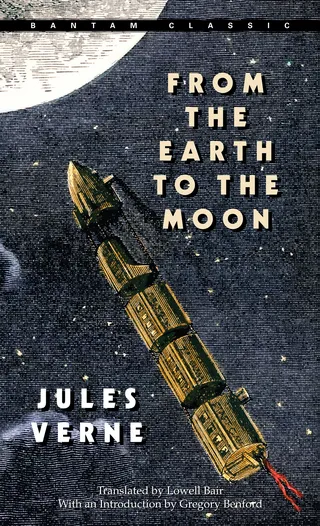
Having been fired out of the giant Columbiad space gun, the Baltimore Gun Club's bullet-shaped projectile, along with its three passengers, Barbicane, Nicholl and Michel Ardan, begins the five-day trip to the moon. A few minutes into the journey, a small, bright asteroid passes within a few hundred yards of them, but luckily does not collide with the projectile. The asteroid had been captured by the Earth's gravity and had become a second moon. The three travelers undergo a series of adventures and misadventures during the rest of the journey, including disposing of the body of a dog out a window, suffering intoxication by gases, and making calculations leading them, briefly, to believe that they are to fall back to Earth. During the latter part of the voyage, it becomes apparent that the gravitational force of their earlier encounter with the asteroid has caused the projectile to deviate from its course.
Jules Verne
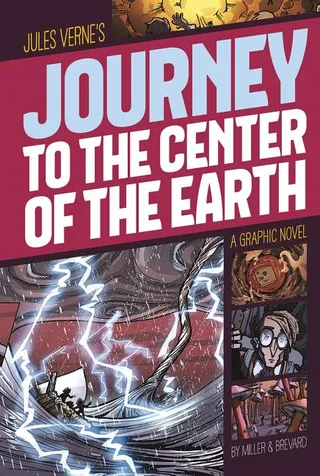
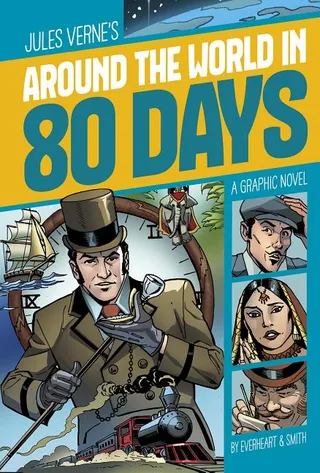
Jules Verne (1828-1905) used a combination of scientific facts and his imagination to take readers on extraordinary imaginative journeys to fantastic places. In such books as Around the World in Eighty Days, From the Earth to the Moon, and Journey to the Center of the Earth, he predicted many technological advances of the twentieth century, including the invention of the automobile, telephone, and nuclear submarines, as well as atomic power and travel to the moon by rocket.
More by Jules Verne











Why Readwise Books?
Readwise Books is an ebook & audiobook platform that automatically logs how much you and your friends read, making it fun and easy to read more. Learn more →