Report an issue
Tell us what's wrong and we'll take a look.
Thanks – we got it. We'll review and follow up if needed.
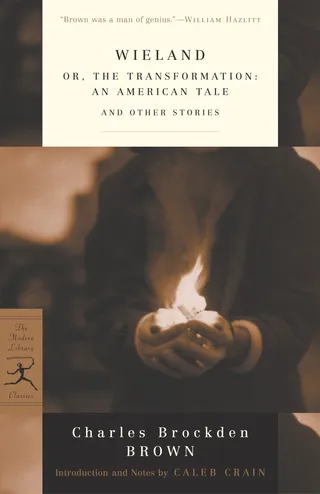
One of the earliest major American novels, Wieland (1798) is a thrilling tale of suspense and intrigue set in rural Pennsylvania in the 1760s. Based on an actual case of a New York farmer who murdered his family, the novel employs Gothic devices and sensational elements such as spontaneous combustion, ventriloquism, and religious fanaticism.
Charles Brockden Brown
Charles Brockden Brown (1771-1810) was an American writer and one of the earliest practitioners of the American novel. Born in Philadelphia, Pennsylvania, he played a crucial role in the development of American literature during the early years of the nation. Brown was a prolific writer, authoring numerous novels, short stories, and essays. His works often explored themes of madness, paranoia, and psychological turmoil, reflecting the anxieties of the post-Revolutionary War era. Brown's works combined elements of Gothic fiction, sentimentalism, and psychological exploration, making him an important figure in the development of early American literature. While Brown's literary career was relatively short-lived, his influence on subsequent generations of American writers cannot be overstated. His innovative approach to storytelling and exploration of the human psyche laid the groundwork for future writers to delve into the darker aspects of the American experience.
More by Charles Brockden Brown






Why Readwise Books?
Readwise Books is an ebook & audiobook platform that automatically logs how much you and your friends read, making it fun and easy to read more. Learn more →