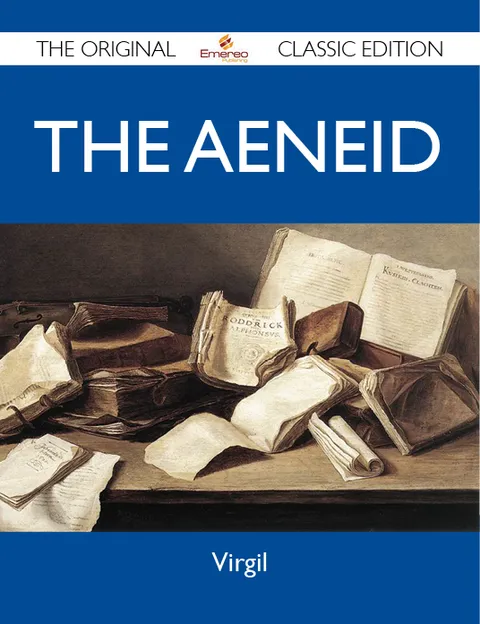
The Aeneid - The Original Classic Edition
Report an issue
Tell us what's wrong and we'll take a look.
Thanks – we got it. We'll review and follow up if needed.
It is in the Aeneid, not the Iliad (as most people who have not read the works tend to believe) that we see the spectacle of the Trojan Horse and the famous line I do not trust Greeks bearing gifts. The Iliad ends with the death of Hektor - before the plan of the Trojan Horse is devised by Odysseus. The Odyssey picks up after the sack of Troy. The Aeneid fills in the gaps and narrates the story of the few Trojans who escape the wrath of the Greeks. According to legend, Romulus and Remes (the two brothers who eventually founded the city itself) were descendents of Aeneas.
As is usual, Fitzgeralds translation is top notch. The book also contains a useful glossary and postscript which help elucidate the allusions to Hannibal and Cleopatra which the Romans of Virgils day would have picked up right away, but which might be unfamiliar to modern day readers.
Read the Aeneid. You will be glad you did, for this is an extraordinary epic.
Virgil Virgil
Publius Vergilius Maro, known as Virgil, was an influential Roman poet of the Augustan period. Born on October 15, 70 BC, in Cisalpine Gaul, he is best remembered for his three major works: the Eclogues, the Georgics, and the epic Aeneid. Virgil s works had a profound impact on Latin literature and were inspired by earlier writers like Homer, Lucretius, and Ennius. His writing reflected both the ideals of Roman society and his personal reflections on the human condition. Virgil's poetry often explored themes of heroism, duty, and the relationship between humans and nature. Virgil's work on the Aeneid is especially notable, as it became the Roman national epic, linking the founding of Rome to the heroic deeds of the Trojans. His Eclogues are pastoral poems that idealize rural life and often reflect personal loss or societal turmoil. His Georgics extol agricultural work while offering insights into the philosophy of labor. Virgil's influence extended far beyond his lifetime, shaping Western literary tradition. He died on September 21, 19 BC, at the age of 50, in Brindisi, Italy. His parents were Magia Polla and Vergilius Maro.
More by Virgil Virgil






Why Readwise Books?
Readwise Books is an ebook & audiobook platform that automatically logs how much you and your friends read, making it fun and easy to read more. Learn more →