Report an issue
Tell us what's wrong and we'll take a look.
Thanks – we got it. We'll review and follow up if needed.
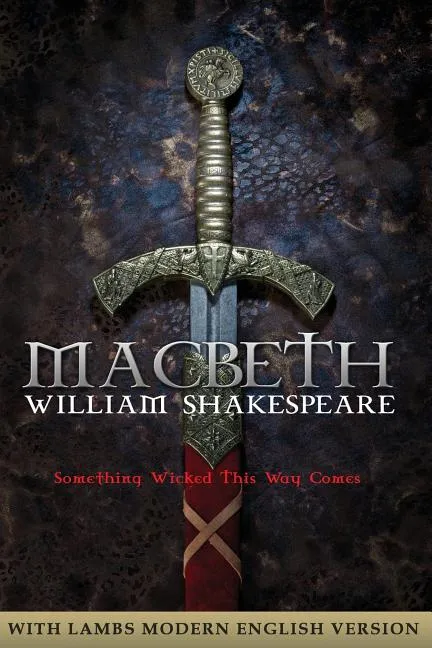
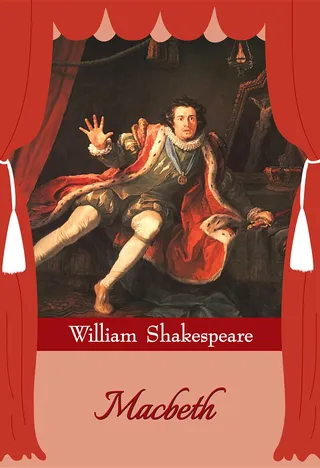
The Corrupting Power of Unchecked Ambition. The main theme of Macbeth-the destruction wrought when ambition goes unchecked by moral constraints-finds its most powerful expression in the play's two main characters. Macbeth (full title The Tragedy of Macbeth) is a tragedy written by William Shakespeare, and is considered one of his darkest and most powerful works. Set in Scotland, the play illustrates the damaging physical and psychological effects of political ambition on those who seek power for its own sake. The play is believed to have been written between 1599 and 1606, and is most commonly dated 1606. The earliest account of a performance of what was probably Shakespeare's play is the Summer of 1606, when Simon Forman recorded seeing such a play at the Globe Theatre. It was first published in the Folio of 1623, possibly from a prompt book. It was most likely written during the reign of James I, who had been James VI of Scotland before he succeeded to the English throne in 1603. James was a patron of Shakespeare's acting company, and of all the plays Shakespeare wrote during James's reign, Macbeth most clearly reflects the playwright's relationship with the sovereign. Macbeth is Shakespeare's shortest tragedy, and tells the story of a brave Scottish general named Macbeth who receives a prophecy from a trio of witches that one day he will become King of Scotland. Consumed by ambition and spurred to action by his wife, Macbeth murders King Duncan and takes the throne for himself. He is then wracked with guilt and paranoia, and he soon becomes a tyrannical ruler as he is forced to commit more and more murders to protect himself from enmity and suspicion. The bloodbath and consequent civil war swiftly take Macbeth and Lady Macbeth into the realms of arrogance, madness, and death. Shakespeare's source for the tragedy is the account of Macbeth, King of Scotland, Macduff, and Duncan in Holinshed's Chronicles (1587), a history of England, Scotland, and Ireland familiar to Shakespeare and his contemporaries, although the events in the play differ extensively from the history of the real Macbeth. In recent scholarship, the events of the tragedy are usually associated more closely with the execution of Henry Garnett for complicity in the Gunpowder Plot of 1605. In the backstage world of theatre, some believe that the play is cursed, and will not mention its title aloud, referring to it instead as "the Scottish play". Over the course of many centuries, the play has attracted some of the most renowned actors to the roles of Macbeth and Lady Macbeth. Macbeth, a duke of Scotland, receives a prophecy from a trio of witches that one day he will become King of Scotland. Consumed by ambition and spurred to action by his wife, Macbeth murders his king and takes the throne for himself.
Charles and Mary Lamb
Charles and Mary Lamb were a brother and sister writing team best known for their children's book Tales From Shakespeare. Despite being born eleven years apart, Charles (1775-1834) and Mary (1764-1847) were incredibly close as children with Mary teaching her younger brother how to read and appreciate literature. The two would experience vastly different upbringings as Charles would obtain his formal education at Christ's Hospital, while Mary had been informally introduced to the written word through her father's stories. Unfortunately both would suffer from some form of mental illness with Mary's mental health being far worse than that of her brother Charles'; the Lamb family would suffer a massive tragedy in 1796 when Mary suffered a mental breakdown and stabbed her mother to death in the family home. While devastated, Charles would fight to keep his sister from being committed to an insane asylum and took personal responsibility for her care. Shortly after this, Charles would begin his literary career with the publication of four poems in his dear friend Samuel Taylor Coleridge's Poems on Various Subjects. He would add two more poems to the second edition and publish a book of poetry in collaboration with Charles Lloyd entitled Blank Verse. Mary's literary career would begin at the behest of William and Mary Jane Godwin who asked for her contributions to their Juvenile Library. Her most notable works would include two collaborations with their brother Tales From Shakespeare (1807), Poems for Children (1810) and an independently written collection of stories entitled Mrs. Leicester's School (1808). The two siblings would leave the world as they entered-more than a decade apart; with Charles dying of a baterial infection in 1834 and Mary dying of natural causes in 1847.
More by Charles and Mary Lamb






Why Readwise Books?
Readwise Books is an ebook & audiobook platform that automatically logs how much you and your friends read, making it fun and easy to read more. Learn more →