
Siddartha
Report an issue
Tell us what's wrong and we'll take a look.
Thanks – we got it. We'll review and follow up if needed.
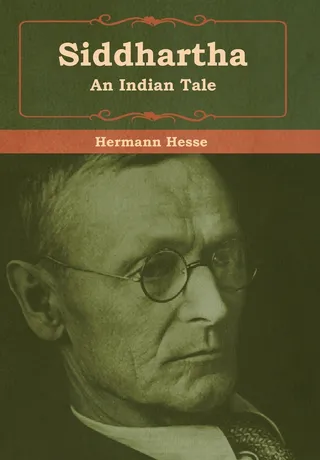
Siddhartha is a novel by Hermann Hesse that deals with the spiritual journey of self-discovery of a man named Siddhartha during the time of the Gautama Buddha. The book, Hesse's ninth novel, was written in German, in a simple, lyrical style. It was published in America in 1951 and became influential during the 1960s. Hesse dedicated the first part of it to Romain Rolland and the second part to Wilhelm Gundert, his cousin. The word Siddhartha is made up of two words in Sanskrit language, siddha (achieved) + artha (what was searched for), which together means "he who has found meaning (of existence)" or "he who has attained his goals". In fact, the Buddha's own name, before his renunciation, was Siddhartha Gautama, Prince of Kapilavastu. In this book, the Buddha is referred to as "Gotama"
Herman Hesse
Hermann Hesse was born in Germany in 1877 and later became a citizen of Switzerland. As a Western man profoundly affected by the mysticism of Eastern thought, he wrote novels, stories, and essays bearing a vital spiritual force that has captured the imagination and loyalty of many generations of readers. His works include Steppenwolf, Narcissus and Goldmund, and The Glass Bead Game. He was awarded the Nobel Prize in Literature in 1946. Hermann Hesse died in 1962.
More by Herman Hesse









Why Readwise Books?
Readwise Books is an ebook & audiobook platform that automatically logs how much you and your friends read, making it fun and easy to read more. Learn more →