Report an issue
Tell us what's wrong and we'll take a look.
Thanks – we got it. We'll review and follow up if needed.
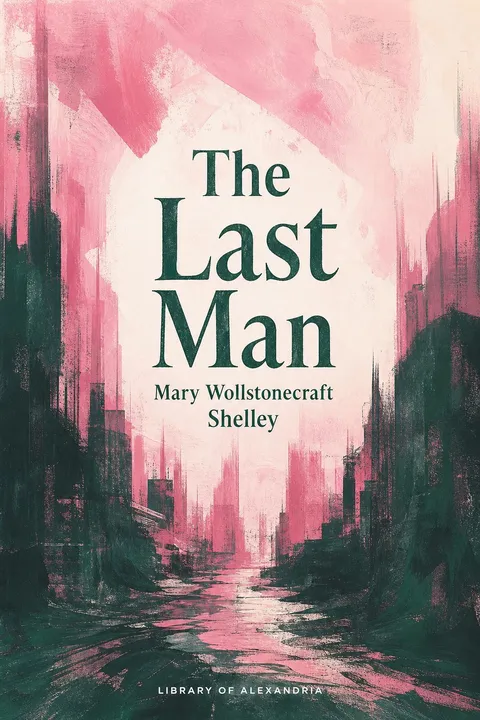
What remains of a life when there is no one left to share it? A devastating plague turns human ambition into a struggle for survival in Mary Shelley's vision of a world falling silent.
First published in 1826, The Last Man imagines a twenty-first century in which disease brings civilization to collapse. Its narrator, Lionel Verney, looks back on a life shaped by friendship, love, and political hopes before catastrophe strips away the society he knows. As the population dwindles, the fate of nations gives way to the urgent question of how to endure another day.
Shelley joins the vast scale of an apocalyptic novel to the personal weight of grief. Political ideals and confidence in progress meet a disaster they cannot master, while loyalty and affection become more precious as they grow more vulnerable. The result is both an early landmark of speculative fiction and a searching meditation on solitude: what does it mean to remember, to hope, or to tell a story when its listeners are gone?
What readers find inside:
- A future undone - A twenty-first-century setting becomes the stage for plague and the breakdown of organized society.
- Lionel Verney's testimony - A survivor's account connects a worldwide catastrophe to the intimate experience of losing those he loves.
- Politics under pressure - Human plans and public ambitions confront the limits of power in the face of disease.
- Love and bereavement - Friendship and attachment give the novel's approaching extinction its emotional force.
- The burden of memory - The persistence of recollection raises questions about identity and purpose in profound isolation.
For readers of classic science fiction, literary dystopias, and philosophical novels of loss, Shelley offers a catastrophe measured not only in fallen nations but in broken human bonds. Readers drawn to the questions behind Frankenstein will find another unsettling exploration of humanity and its limits.
Enter Lionel Verney's world and follow his search for meaning as the familiar foundations of life disappear.
Mary Shelley
Mary Wollstonecraft Godwin was born in 1797, the daughter of two of the leading radical writers of the age. Her mother died just days after her birth and she was educated at home by her father and encouraged in literary pursuits. She eloped with and subsequently married the Romantic poet Percy Bysshe Shelley, but their life together was full of hardship. The couple were ruined by disapproving parents and Mary lost three of her four children. Although its subject matter was extremely dark, her first novel Frankenstein (1818) was an instant sensation. Subsequent works such as Mathilda (1819), Valperga (1823) and The Last Man (1826) were less successful but are now finally receiving the critical acclaim that they deserve.
More by Mary Shelley


Why Readwise Books?
Readwise Books is an ebook & audiobook platform that automatically logs how much you and your friends read, making it fun and easy to read more. Learn more →