
Report an issue
Tell us what's wrong and we'll take a look.
Thanks – we got it. We'll review and follow up if needed.
Stefan Zweig wrote these four legends primarily in the 1930s as Europe descended toward fascism. He turned from contemporary psychological novellas to legendary material, seeking timeless themes that transcended specific historical horror.
"The Dissimilar Doubles" - Twin sisters diverge: one pursuing sensual pleasure, the other austere devotion. Moral parable that complicates simple judgments about flesh and spirit.
"The Buried Candelabrum" - A maimed Jew journeys to 5th-century Constantinople seeking the Temple menorah. Written as antisemitism intensified, exploring displacement and whether exile can be overcome.
"Rachel Against God" - The biblical matriarch rises from her grave to confront God over her descendants' suffering. Audacious premise from Jewish tradition of arguing with the divine.
"The Eyes of the Eternal Brother" - Indian legend of a warrior-judge who renounces violence after killing his brother, only to discover he cannot escape his violent karma.
Zweig's cosmopolitan range is extraordinary-moving from Jewish tradition to Christian legend to Indian mythology with elegant prose and psychological insight. Yet the universalizing impulse that enabled this range also creates tensions: extracting "universal themes" sometimes flattens what makes specific contexts distinctive.
These represent Zweig's experimental engagement with legendary forms during Europe's darkest decade-a writer seeking ways to preserve humanistic values through ancient stories while the civilization that enabled such cosmopolitanism was being destroyed. They work best as literary meditations in legendary form, demonstrating how a master stylist navigated between timeless myth and contemporary catastrophe.
Essential reading for understanding Zweig's range and his response to the 1930s.
Stefan Zweig
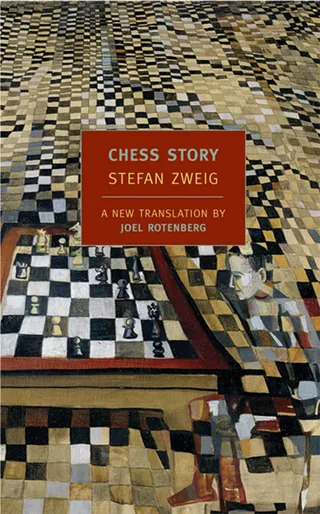
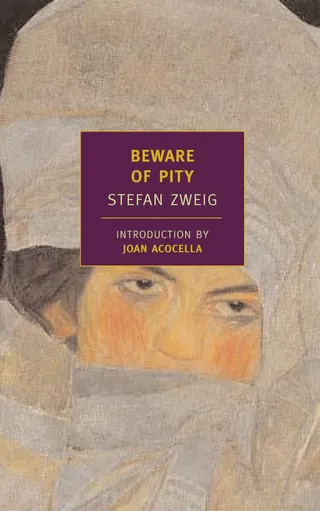
Stefan Zweig (1881-1942), novelist, biographer, poet, and translator, was born in Vienna into a wealthy Austrian Jewish family. During the 1930s, he was one of the bestselling writers in Europe, and was among the most translated German-language writers before the Second World War. With the rise of Nazism, he moved from Salzburg to London (taking British citizenship), to New York, and finally to Brazil, where he committed suicide with his wife. New York Review Books has published Zweig's novels The Post-Office Girl and Beware of Pity as well as the novella Chess Story.
More by Stefan Zweig









Why Readwise Books?
Readwise Books is an ebook & audiobook platform that automatically logs how much you and your friends read, making it fun and easy to read more. Learn more →