Report an issue
Tell us what's wrong and we'll take a look.
Thanks – we got it. We'll review and follow up if needed.
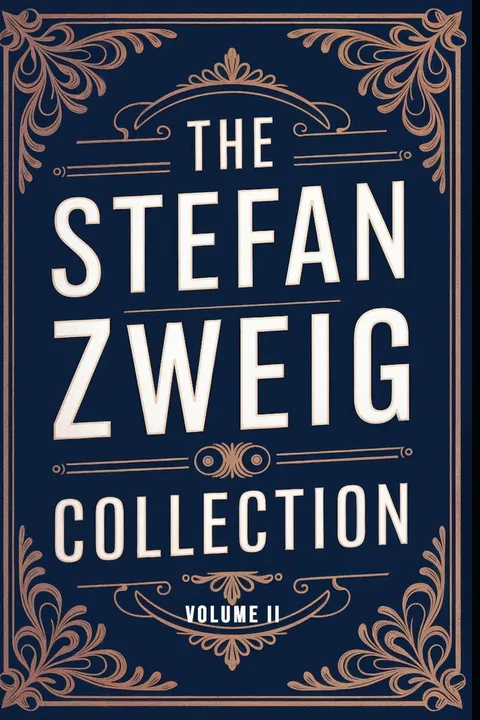
Stefan Zweig was the most translated and widely read German-language author of the 1920s-30s-more popular in some countries than Mann or Hesse. His success came from compressed psychological narratives: characters caught in obsessions they cannot control, prose combining accessibility with genuine sophistication. Yet his reputation collapsed after 1945; literary modernism valued formal experimentation he deliberately avoided. Only recently has his fiction been reconsidered, readers recognizing that apparent simplicity conceals considerable craft.
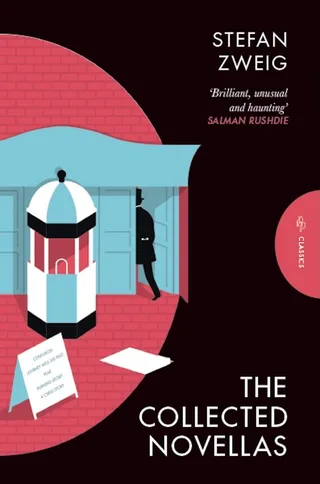
This volume collects five novellas from 1911-1927 showcasing Zweig's range:
"Amok" - A German doctor in colonial Malaya describes how a woman's request for illegal abortion triggered his transformation into someone possessed by obsessive desire. The confessional structure reveals how professional authority can become intimidation, how "love" and violence exist in disturbing proximity.
"Letter from an Unknown Woman" - Zweig's most famous work: a Viennese writer receives a letter from a woman who has just died, revealing she loved him throughout her life. He doesn't remember her. The woman's passionate, psychologically complex letter contrasts with his shallow forgetfulness. Is her devotion noble or pathological? Zweig presents her psychology with precision but doesn't answer.
"The Moonlit Alley" - Guilt and memory torment a man haunted by a death he may have caused or prevented. Zweig frequently examined how single moments shape entire lives, how consciousness processes trauma.
"Twilight Tale" - Explores nostalgia and disillusionment: how people romanticize the past, how confronting discrepancies between remembered and actual events proves devastating.
"The Fantastic Night" - A man experiences a single night that transforms his understanding of existence-an epiphany narrative rendered in accessible prose rather than modernist experimentation.
Zweig's patterns: educated bourgeois protagonists psychologically vulnerable despite professional success; women possessing depths male characters fail to recognize; obsession as both defining human experience and destructive force. His prose achieves sophistication through rhythm and pacing despite apparent simplicity.
His biography illuminates the work: born Vienna 1881 to wealthy Jewish family, he belonged to cosmopolitan European culture World War I shattered. He fled Austria in 1934, died by suicide in Brazil 1942, despairing at Europe's destruction. His stories' characters clinging to illusions, unable to accept their world has ended-this reflected his own inability to adapt to fascism's Europe.
The limitations remain visible: melodrama occasionally excessive, gender politics problematic (women as objects of male obsession), colonial settings reflect period assumptions. Yet Zweig understood obsession's psychology-how desire overwhelms rational control, how past traumas shape present behavior. His confessional narratives capture how people reveal themselves to strangers more easily than to intimates.
These work best as psychological case studies rather than realistic fiction-exploring extreme states that reveal truths ordinary experience obscures. Essential Zweig: psychologically intense, dramatically structured stories that linger in memory, emotional intensity that hasn't dated even when settings and assumptions have.
Stefan Zweig
Stefan Zweig (1881-1942), novelist, biographer, poet, and translator, was born in Vienna into a wealthy Austrian Jewish family. During the 1930s, he was one of the bestselling writers in Europe, and was among the most translated German-language writers before the Second World War. With the rise of Nazism, he moved from Salzburg to London (taking British citizenship), to New York, and finally to Brazil, where he committed suicide with his wife. New York Review Books has published Zweig's novels The Post-Office Girl and Beware of Pity as well as the novella Chess Story.
More by Stefan Zweig








Why Readwise Books?
Readwise Books is an ebook & audiobook platform that automatically logs how much you and your friends read, making it fun and easy to read more. Learn more →