Report an issue
Tell us what's wrong and we'll take a look.
Thanks – we got it. We'll review and follow up if needed.
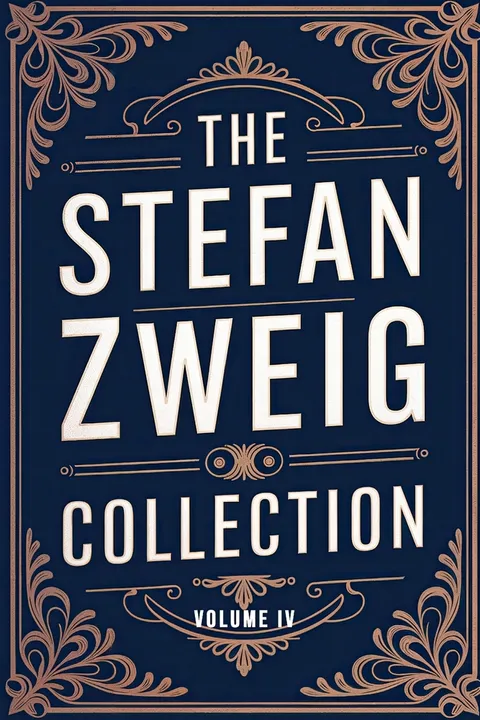
The Stefan Zweig Collection - Volume 4: Moments of Reckless Passion
In each of the three works gathered here, Stefan Zweig focuses his unrivaled psychological lens on the split second when desire erupts, conventions shatter, and life pivots irrevocably.
Twenty-Four Hours in the Life of a Woman (1927) unfolds on the sun-drenched Riviera, where an English widow, long sealed in respectability, finds herself mesmerized by the fevered hands of a young Polish gambler at the roulette table. Within a single day she moves from curiosity to compassion to an all-consuming devotion that both resurrects and imperils her sense of self. Compressed into one revolution of the clock, this tale captures every pulse-beat of temptation and remorse, showcasing Zweig at the height of his powers.
Burning Secret (1911) turns the psychological screws from a different angle. At an Austrian Alpine spa, a worldly baron befriends a lonely twelve-year-old boy as a calculated route to seducing the child's mother. Told largely through the boy's bewildered eyes, the novella cuts through adult manipulation, exposing how easily innocence becomes collateral damage when desire turns predatory. The aftermath scorches everyone involved.
The Wonders of Life (1904) offers a different meditation on transformation. In Antwerp during the violent spring of 1566, an elderly painter commissions a young Jewish orphan as his model for a Madonna. Through his gentle treatment and the act of painting her with a child, she blossoms into womanhood-until the iconoclastic fury of the Reformation threatens to destroy everything precious to both artist and model. Already in this early work, Zweig demonstrates his fascination with how a single unexpected encounter can irrevocably reshape a life.
Read in sequence, these novellas trace an emotional arc from rapturous awakening through corrosive seduction to spiritual transformation, revealing Zweig's abiding fascination with the fragile membrane between order and chaos. His prose-swift, elegant, and unsparing-makes each turning point feel contemporary, reminding us that our destinies can pivot on a heartbeat. Volume 4 invites you to step into those decisive instants and measure, alongside Zweig's characters, the exhilarating and perilous cost of passion unleashed.
Stefan Zweig
Stefan Zweig (1881-1942), novelist, biographer, poet, and translator, was born in Vienna into a wealthy Austrian Jewish family. During the 1930s, he was one of the bestselling writers in Europe, and was among the most translated German-language writers before the Second World War. With the rise of Nazism, he moved from Salzburg to London (taking British citizenship), to New York, and finally to Brazil, where he committed suicide with his wife. New York Review Books has published Zweig's novels The Post-Office Girl and Beware of Pity as well as the novella Chess Story.
More by Stefan Zweig









Why Readwise Books?
Readwise Books is an ebook & audiobook platform that automatically logs how much you and your friends read, making it fun and easy to read more. Learn more →