Report an issue
Tell us what's wrong and we'll take a look.
Thanks – we got it. We'll review and follow up if needed.
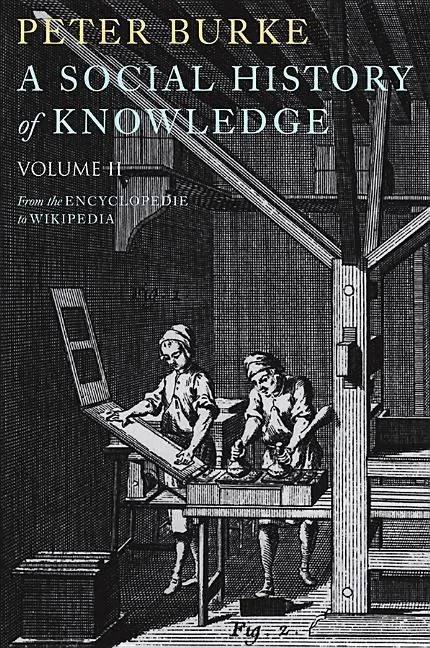
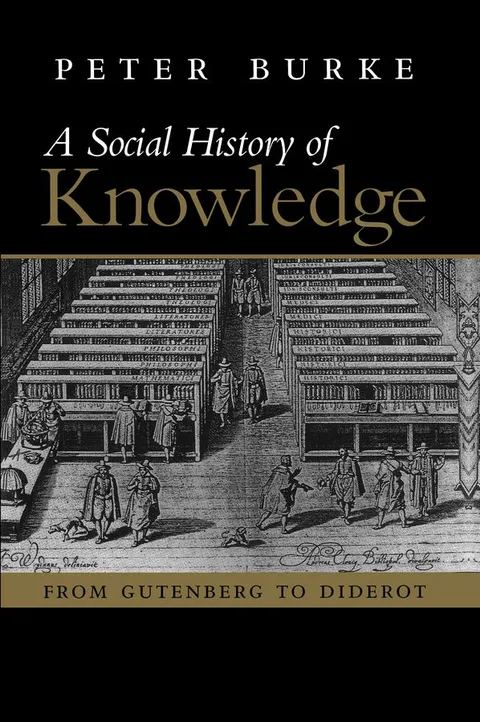
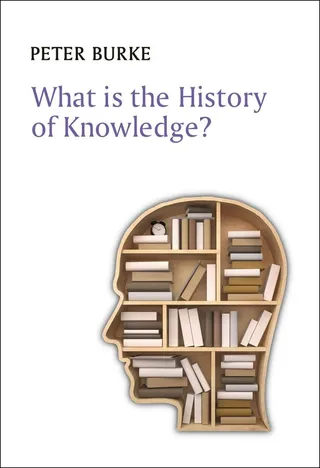
The book opens with an assessment of different sociologies of knowledge from Mannheim to Foucault and beyond, and goes on to discuss intellectuals as a social group and the social institutions (especially universities and academies) which encouraged or discouraged intellectual innovation. Then, in a series of separate chapters, Burke explores the geography, anthropology, politics and economics of knowledge, focusing on the role of cities, academies, states and markets in the process of gathering, classifying, spreading and sometimes concealing information. The final chapters deal with knowledge from the point of view of the individual reader, listener, viewer or consumer, including the problem of the reliability of knowledge discussed so vigorously in the seventeenth century.
One of the most original features of this book is its discussion of knowledges in the plural. It centres on printed knowledge, especially academic knowledge, but it treats the history of the knowledge 'explosion' which followed the invention of printing and the discovery of the world beyond Europe as a process of exchange or negotiation between different knowledges, such as male and female, theoretical and practical, high-status and low-status, and European and non-European.
Although written primarily as a contribution to social or socio-cultural history, this book will also be of interest to historians of science, sociologists, anthropologists, geographers and others in another age of information explosion.
Peter Burke
Roland Recht is curator of the exhibition Le Grand Atelier, Europalia 2007. He is Professor of Art History at the Collège de France and a member of the Institut de France. Catheline Pèrier-d'Ieteren is Professor of the History of Art and Architecture at the Free University of Brussels. Pascal Griener is Professor of art history at the University of Neuchâtel. Peter Burke is Professor of Cultural History at the University of Cambridge. His many books include History and Social Theory and Eyewitnessing: The Uses of Images as Historical Evidence, both from Cornell.
More by Peter Burke


Why Readwise Books?
Readwise Books is an ebook & audiobook platform that automatically logs how much you and your friends read, making it fun and easy to read more. Learn more →