Report an issue
Tell us what's wrong and we'll take a look.
Thanks – we got it. We'll review and follow up if needed.
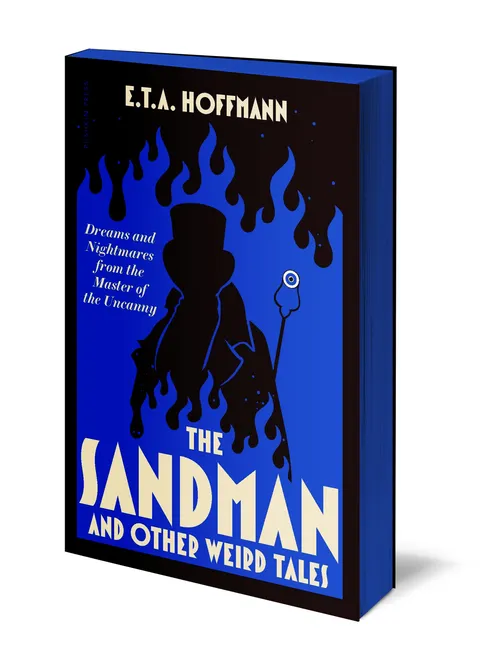
3 uncanny tales from “the godfather of modern horror and fantasy” (New York Review of Books) full of doppelgangers, unfulfillable desire, irony, and menace.
A deluxe collectible gift paperback featuring stunning sprayed edges and a beautiful art deco design!
Still celebrated as the foundational texts of modern fantasy and horror, these 3 unsettling tales of nightmares, madness, and otherworldly power represent renowned German author E.T.A. Hoffmann at his very best.
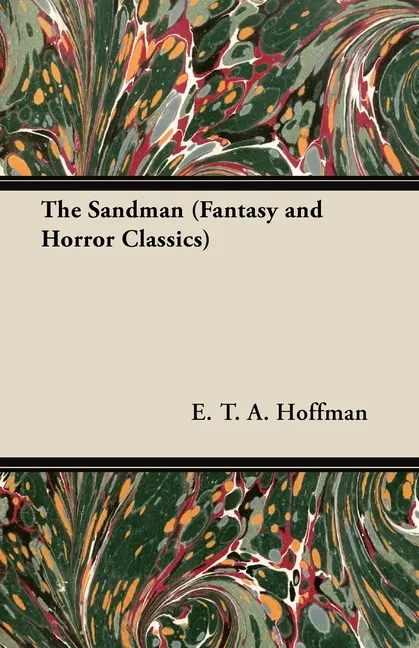
In “The Sandman”, young Nathanael grows up terrified of a legendary figure who will steal his eyes if he's caught out of bed at night - but it's only when Nathanael has grown to adulthood, seemingly settled and happy, that the full, terrifying truth unfolds. A living doll, a series of doppelgangers, and the seeds of madness combine in this classic story of self-destruction.
This obsession returns in “The Cremona Violin,” where suppressed passion and possessive control prove a fatal mix as an overbearing father grapples with his musically talented daughter who could die of heart failure if she unleashes the full power of her extraordinary voice.
The collection concludes with Hoffman’s arguable masterpiece, “The Golden Pot,” a novella-length tale, disturbing, exciting, and dream-like that introduces the bumbling Anselmus, whose romantic tribulations are complicated by a witch's curse and the fact that he's in love with a girl who also happens to be a snake.
Inspiring countless unearthly classics, from The Nutcracker to the works of Poe and Kafka, Hoffmann's doppelgangers, unattainable love objects, and sinister puppet masters have lived on, becoming key figures in the modern imagination.
E.T.A. Hoffmann
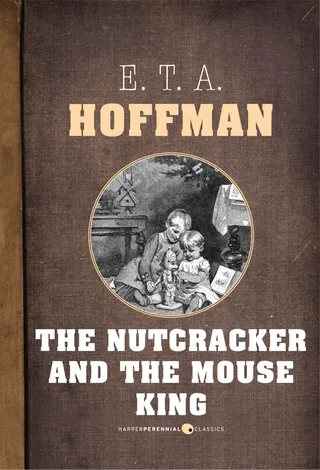
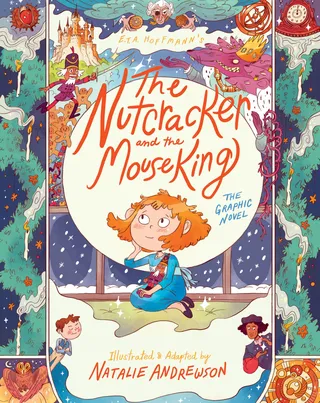
Ernst Theodor Amadeus Hoffmann (1776–1822) was a German author, artist, and composer who is best remembered for his story “The Nutcracker and the King of Mice.”
More by E.T.A. Hoffmann







Thomas Carlyle
Translated by
Thomas Carlyle was a Victorian-era Scottish author, philosopher, and historian. Raised by a strict Calvinist family, Carlyle abandoned his career with the clergy in 1821 after losing his faith, focusing instead on writing. Carlyle went on to publish such noted works as Life of Schiller, Sartor Resartus—which was inspired by his crisis of faith, and The French Revolution, and became one of the most prominent writers of his day. Carlyle’s later works included Heroes and Hero-Worship and Frederick the Great. Carlyle passed away in 1881.


Why Readwise Books?
Readwise Books is an ebook & audiobook platform that automatically logs how much you and your friends read, making it fun and easy to read more. Learn more →