Report an issue
Tell us what's wrong and we'll take a look.
Thanks – we got it. We'll review and follow up if needed.
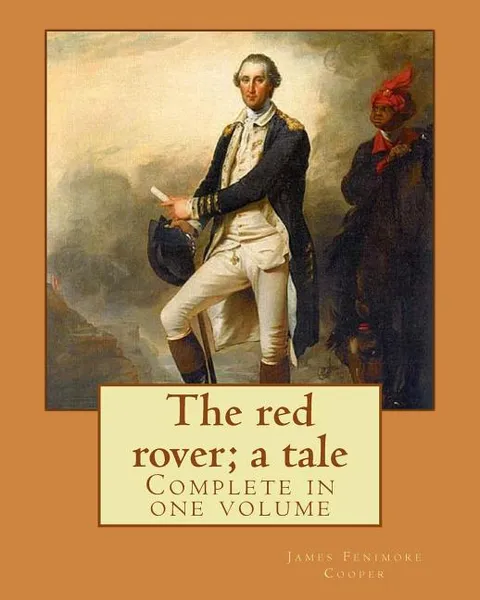
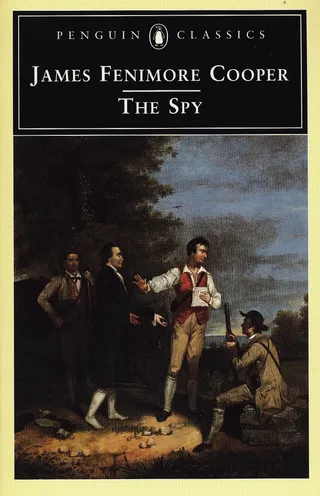
The Red Rover is a novel by American writer James Fenimore Cooper. It was originally published in Paris on November 27, 1827, before being published in London three days later on November 30. It was not published in the United States until January 9, 1828, in Philadelphia. Soon after its publication it was adapted for theater both in the United States and in England. The novel follows the activities of the sailor Dick Fid, free black sailor Scipio Africanus and Royal Navy officer James Wilder as they encounter the famous pirate, "The Red Rover". A contemporary reviewer in the North American Review noted how Cooper was particularly good at writing sea novels such as The Red Rover, the sea being his more natural element than what the author calls wilderness novels which focused on an Indian introducing a white man to the wilderness, like The Last of the Mohicans. In addition, The Red Rover presents some of the first serious depictions of characters of African lineage in American literature. Characters: The two black characters, Scipio Africanus, a free black sailor, and Cassandra, a slave attendant, throughout the novel remain distanced and separate from their white companions. While all the other main characters end the book with positive outcomes, Scipio finds a tragic end. Therman O'Daniel suggests, that though these are some of the first black characters to be seriously treated in American literature, they still receive unsatisfactory outcomes for all their actions. For Cooper, the sea novel offered an opportunity to blur social barriers between characters. This is particularly evident in his treatment of women, such as a girl disguised as a cabin boy in The Red Rover who is able to function within the crew, even though she is female. Additionally, throughout the novel, a tight friendship exists between Scipio Africanus, fellow sailor Dick Fid, and a Royal Navy officer whom they befriend after saving his life. Though the two men treat him like an officer, deferring to him with respect, they still remain friendly............. James Fenimore Cooper (September 15, 1789 - September 15, 1851) was a prolific and popular American writer of the early 19th century. His historical romances of frontier and Indian life in the early American days created a unique form of American literature. He lived most of his life in Cooperstown, New York, which was founded by his father William on property that he owned. Cooper was a lifelong member of the Episcopal Church and, in his later years, contributed generously to it.He attended Yale University for three years, where he was a member of the Linonian Society, but was expelled for misbehavior. Before embarking on his career as a writer, he served in the U.S. Navy as a Midshipman, which greatly influenced many of his novels and other writings. The novel that launched his career was The Spy, a tale about counterespionage set during the Revolutionary War and published in 1821. He also wrote numerous sea stories, and his best-known works are five historical novels of the frontier period known as the Leatherstocking Tales. Among naval historians, Cooper's works on the early U.S. Navy have been well received, but they were sometimes criticized by his contemporaries. Among his most famous works is the Romantic novel The Last of the Mohicans, often regarded as his masterpiece.....
James Fenimore Cooper
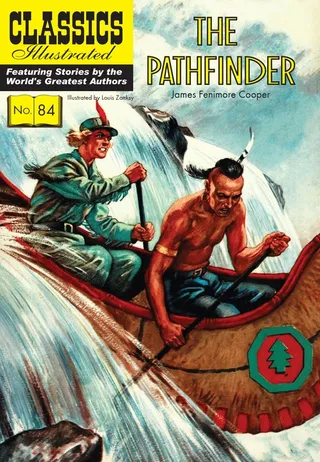
James Fenimore Cooper (1789-1851) was America's first successful popular novelist. Son of the prominent federalist William Cooper, founder of the Cooperstown settlement, James was educated at Yale in preparation for a genteel life as a federalist gentleman. After his father's death in an 1809 duel, Cooper quickly squandered his inheritance, and at thirty was on the verge of bankruptcy. He decided to try his hand at writing. His first novel, Precaution, a domestic comedy set in England, lost money, but Cooper had discovered his vocation. Cooper established his reputation after his second novel, The Spy, and in his third book, the autobiographical Pioneers, Cooper introduced the character of Natty Bumppo, a uniquely American personification of rugged individualism and the pioneer spirit. A second book featuring Bumppo, The Last of the Mohicans, quickly became the most widely read work of the day, solidifying Cooper's popularity in the United States and in Europe. Cooper was a prolific writer, publishing thirty-two novels, twelve works of nonfiction, one play, and numerous pamphlets and articles. His most lasting contributions to American literature were his five books about Natty Bumppo. Later anthologized as The Leatherstocking Tales, they are best read in the order in which they were written: The Pioneers, The Last of the Mohicans, The Prairie, The Pathfinder, and The Deerslayer.
More by James Fenimore Cooper





Why Readwise Books?
Readwise Books is an ebook & audiobook platform that automatically logs how much you and your friends read, making it fun and easy to read more. Learn more →