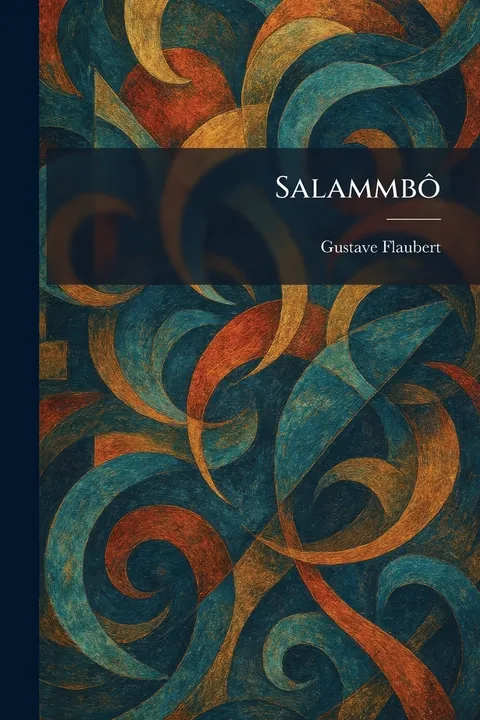
Salammbô
Report an issue
Tell us what's wrong and we'll take a look.
Thanks – we got it. We'll review and follow up if needed.
"Salammbo" is a vivid and visceral historical novel set in the aftermath of the First Punic War. Following the conflict between Rome and Carthage, the city of Carthage finds itself besieged by its own unpaid mercenaries. At the heart of this epic struggle is the eponymous Salammbo, daughter of the legendary general Hamilcar Barca and a priestess of the goddess Tanit. When the mercenary leader Matho steals the Zaimph, the sacred veil of the goddess, he sets in motion a cycle of obsession, violence, and tragedy.
Gustave Flaubert's masterpiece is renowned for its lush, sensory prose and its meticulous reconstruction of the ancient world. It explores themes of religious fervor, political betrayal, and the destructive power of desire. Through grand battle scenes and intimate moments of mysticism, the narrative captures the brutal reality of ancient warfare and the decadent splendor of North African antiquity. "Salammbo" remains a cornerstone of 19th-century literature, offering readers a haunting and immersive journey into a forgotten era of history.
This work has been selected by scholars as being culturally important, and is part of the knowledge base of civilization as we know it. This work was reproduced from the original artifact, and remains as true to the original work as possible. Therefore, you may see the original copyright references, library stamps (as most of these works have been housed in our most important libraries around the world), and other notations in the work.
This work is in the public domain in the United States of America, and possibly other nations. Within the United States, you may freely copy and distribute this work, as no entity (individual or corporate) has a copyright on the body of the work.
As a reproduction of a historical artifact, this work may contain missing or blurred pages, poor pictures, errant marks, etc. Scholars believe, and we concur, that this work is important enough to be preserved, reproduced, and made generally available to the public. We appreciate your support of the preservation process, and thank you for being an important part of keeping this knowledge alive and relevant.
Gustave Flaubert
Gustave Flaubert (1821–1880) was born in Rouen, France, and dropped out of law school to become a writer. His first published novel, Madame Bovary, was censured by the French government; the resulting trial, on charges of obscenity, brought Flaubert to national prominence. He was eventually acquitted, and Emma Bovary’s tragic quest for romance is now considered one of the finest novels in Western literature.
More by Gustave Flaubert











Why Readwise Books?
Readwise Books is an ebook & audiobook platform that automatically logs how much you and your friends read, making it fun and easy to read more. Learn more →