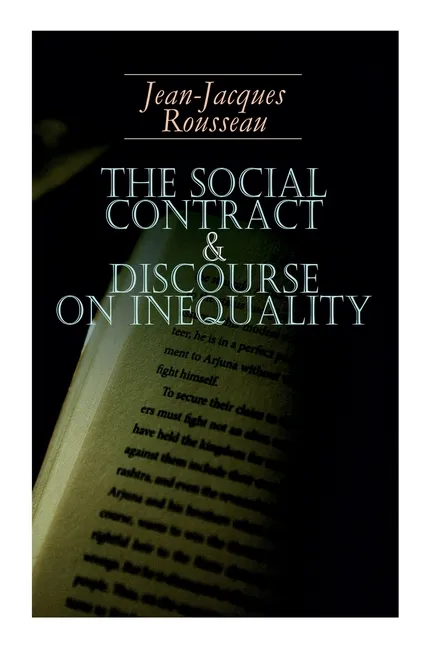
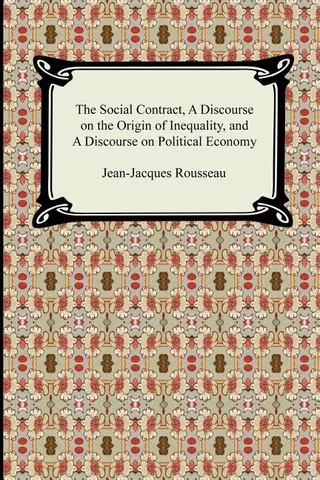
The Social Contract & Discourse on Inequality
Including Discourse on the Arts and Sciences & a Discourse on Political Economy
Report an issue
Tell us what's wrong and we'll take a look.
Thanks – we got it. We'll review and follow up if needed.
In "The Social Contract & Discourse on Inequality," Jean-Jacques Rousseau presents a compelling exploration of political philosophy and human nature, arguing for the necessity of a social contract to achieve true freedom and equality. Combining eloquent prose with keen philosophical insight, Rousseau critiques contemporary society's moral decay while illustrating the stark contrasts between natural human existence and the inequalities produced by civilization. His innovative ideas resonate within the Enlightenment's broader intellectual context, challenging the foundations of authority and advocating for a government based on the collective will of the people. Rousseau, a pivotal figure of the Enlightenment, drew from his own experiences of alienation and societal critique, crafting these texts as part of his quest to understand the true essence of human relationships and governance. His reflections were profoundly shaped by his views on education and personal development, illustrated in works such as "Emile, or On Education." Rousseau's radical notions of democracy and civic responsibility compelled readers to reconsider individual versus communal interests, laying the groundwork for modern political thought. This essential reading for students of political Theory, history, and philosophy invites readers to engage with the fundamental questions of freedom, authority, and social justice. Rousseau's nuanced arguments not only challenge conventional thinking but also inspire ongoing dialogue about the role of the individual within society, making this work a timeless and essential contribution to ideological discourse.
Jean-Jacques Rousseau
Jean-Jacques Rousseau (1712–1778) was one of the leading figures of the French Enlightenment. The author of popular novels such as Emile, or On Education (1762), he achieved immortality with the publication of philosophical treatises such as The Social Contract (1762) and A Discourse on Inequality (1754). His ideas would serve as the bedrock for leaders of both the American and French Revolutions.
More by Jean-Jacques Rousseau



Why Readwise Books?
Readwise Books is an ebook & audiobook platform that automatically logs how much you and your friends read, making it fun and easy to read more. Learn more →