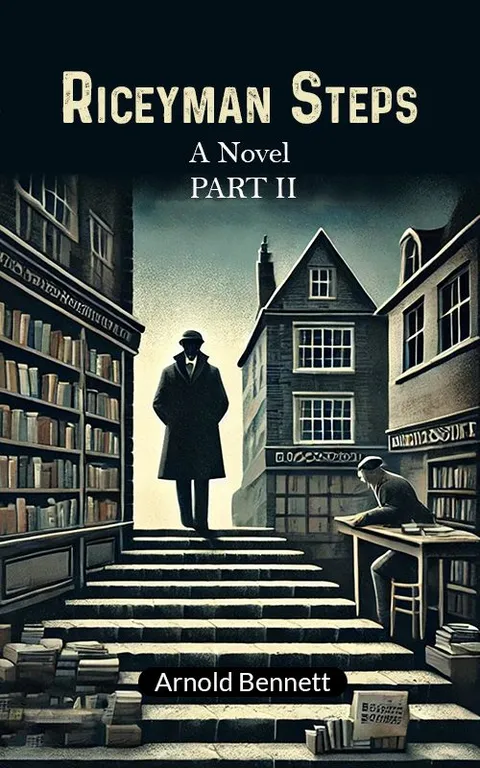
Riceyman Steps A Novel Part II
Report an issue
Tell us what's wrong and we'll take a look.
Thanks – we got it. We'll review and follow up if needed.
“Riceyman Steps: A Novel Part II” by Arnold Bennett continues to delve into the complexities of urban life, portraying the ongoing struggles and social issues faced by its characters. The novel builds upon the foundation laid in the first part, further exploring the impact of city living on individuals and their interactions. As the story progresses, there is a deeper examination of character development, highlighting the growth and changes experienced by the individuals. Family dynamics remain a central theme, with relationships and interactions within families continuing to influence the characters' decisions and conflicts. Personal ambition remains a driving force, as characters navigate their desires for success and status amidst persistent economic hardship. The novel continues to address financial struggles, depicting how these challenges affect the characters' lives and their relationships. Set within a realistic portrayal of contemporary life, “Riceyman Steps” maintains its focus on social realism, capturing the nuances of societal conditions and conflicts. The narrative also explores conflict resolution, providing insights into how personal and social conflicts are addressed and resolved. Throughout, the historical context continues to shape the plot and characters, with ongoing moral dilemmas and ethical questions adding depth to the narrative. “Riceyman Steps: A Novel Part II” offers a compelling continuation of Arnold Bennett's exploration of urban life and the human condition, with a keen eye for detail and realism.
Arnold Bennett
Enoch Arnold Bennett was born on May 27, 1867, in Hanley, Stoke-on-Trent, to parents Enoch Bennett and Sarah Ann Longson. Although initially steered toward a legal career, he found his true vocation in writing. After moving to London, he became a journalist and later a full-time writer, producing novels, short stories, plays, and essays. Bennett's works often focused on the lives of ordinary people in industrial England, particularly in the area known as the Five Towns, which he depicted with vivid realism. His attention to the nuances of class, ambition, and provincial life gained him widespread popularity and critical attention. Some of his most notable works include The Old Wives Tale, Clayhanger, and The Card. Beyond fiction, he was also known for keeping a detailed daily journal and writing essays on self-improvement and literary craft. His experiences in Paris and London enriched his worldview, which he expressed through his cosmopolitan characters and practical philosophical outlook. Bennett s influence extended into public life, and during World War I he worked for the British Ministry of Information. He died in London on March 27, 1931, leaving behind a significant literary legacy and a deeply personal record of early 20th-century English society.
More by Arnold Bennett





Why Readwise Books?
Readwise Books is an ebook & audiobook platform that automatically logs how much you and your friends read, making it fun and easy to read more. Learn more →