Report an issue
Tell us what's wrong and we'll take a look.
Thanks – we got it. We'll review and follow up if needed.
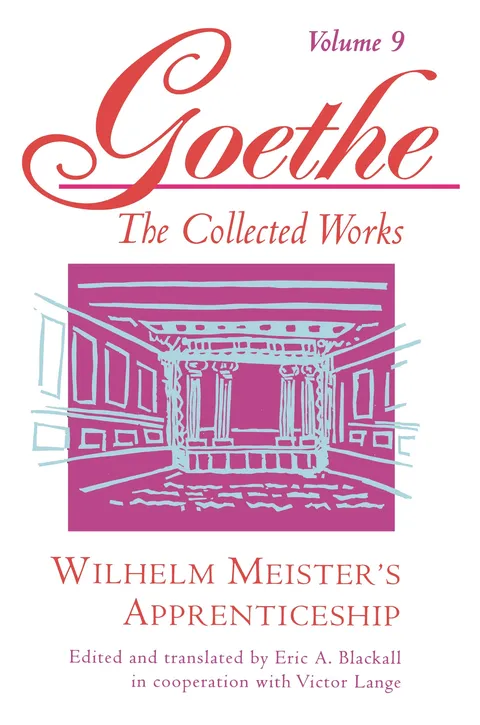
An authoritative English translation of one of the most important works in the history of the novel
Wilhelm Meister’s Apprenticeship (1795–1796), Goethe’s second novel, is a foundational work in the history of the genre—perhaps the first Bildungsroman, a coming-of-age story focusing on the growth and self-realization of the main character. The story centers on Wilhelm, a young man living in the mid-1700s who strives to break free from the restrictive bourgeois world of his upbringing and seek fulfillment as an actor and playwright. Goethe’s novel had a huge impact on the Romantics. Hegel, Schelling, Novalis, and Schopenhauer considered it one of the most important novels yet written. Schlegel famously called it one of the “three tendencies of the age,” along with the French Revolution and the philosophy of Fichte. And Beethoven, Schubert, and Schumann composed songs to poems from the novel. It also had a major influence on nineteenth-century British writers, including Thomas Carlyle, who was its first English translator, and George Eliot. Drawn from Princeton’s authoritative collected works of Goethe, this is the definitive English version of a landmark of world literature.
Johann Wolfgang von Goethe
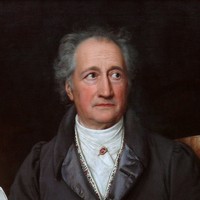
Johann Wolfgang von Goethe was a German writer, poet, playwright, and philosopher, widely regarded as one of the most influential figures in Western literature. Born on August 28, 1749, in Frankfurt, Germany, he is best known for his works such as Faust, The Sorcerer's Apprentice, and Erlkönig. Goethe's works span a wide range of genres, including drama, poetry, and philosophy, and he was a central figure in the Sturm und Drang literary movement. His writing not only revolutionized German literature but also had a profound impact on political and philosophical thought. Throughout his career, Goethe was influenced by figures such as Friedrich Schiller and William Shakespeare, and his ideas on individuality and the human condition helped shape European intellectual history. Goethe was married to Christiane Vulpius from 1806 until her death in 1816. He spent much of his life in Weimar, Germany, where he died on March 22, 1832, at the age of 82. His legacy continues to influence writers, artists, and thinkers across the globe. His exploration of human nature and existential questions remains relevant in modern cultural and intellectual discussions.
More by Johann Wolfgang von Goethe






Why Readwise Books?
Readwise Books is an ebook & audiobook platform that automatically logs how much you and your friends read, making it fun and easy to read more. Learn more →