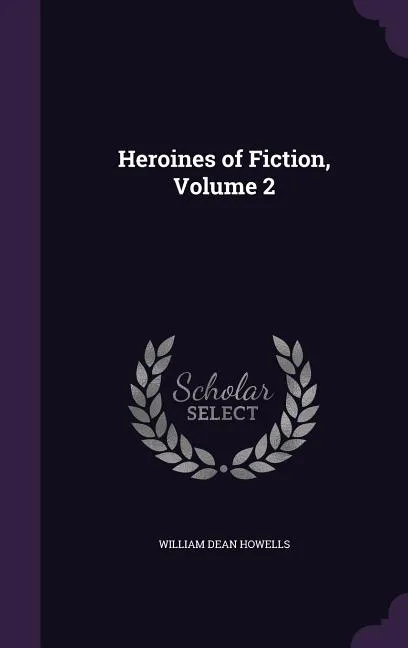
Heroines of Fiction, Volume 2
Report an issue
Tell us what's wrong and we'll take a look.
Thanks – we got it. We'll review and follow up if needed.
This work has been selected by scholars as being culturally important, and is part of the knowledge base of civilization as we know it. This work was reproduced from the original artifact, and remains as true to the original work as possible. Therefore, you will see the original copyright references, library stamps (as most of these works have been housed in our most important libraries around the world), and other notations in the work.
This work is in the public domain in the United States of America, and possibly other nations. Within the United States, you may freely copy and distribute this work, as no entity (individual or corporate) has a copyright on the body of the work.
As a reproduction of a historical artifact, this work may contain missing or blurred pages, poor pictures, errant marks, etc. Scholars believe, and we concur, that this work is important enough to be preserved, reproduced, and made generally available to the public. We appreciate your support of the preservation process, and thank you for being an important part of keeping this knowledge alive and relevant.
William Dean Howells
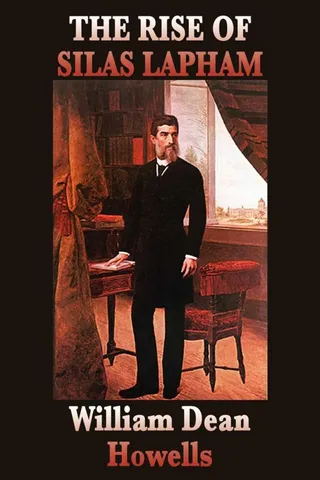
William Dean Howells (1837-1920) was an American novelist, literary critic, and editor who played a significant role in the development of American literature in the late 19th century. He was born in Ohio and worked as a printer's apprentice before becoming a journalist and eventually a fiction writer. Howells' most famous novels include "The Rise of Silas Lapham," "A Hazard of New Fortunes," and "The Minister's Charge." He was also an influential literary critic and editor, serving as the editor of The Atlantic Monthly from 1871 to 1881 and advocating for realism in literature. Howells was a friend and mentor to many writers of his time, including Mark Twain and Henry James. He also played an important role in promoting the works of African American writers, such as Paul Laurence Dunbar. Throughout his career, Howells was known for his social commentary and his concern for social justice. He was a strong advocate for women's rights and was active in the abolitionist movement before the Civil War. Overall, William Dean Howells was a key figure in the development of American literature in the late 19th century, and his contributions as a novelist, critic, and editor continue to be studied and appreciated today.
More by William Dean Howells







Why Readwise Books?
Readwise Books is an ebook & audiobook platform that automatically logs how much you and your friends read, making it fun and easy to read more. Learn more →