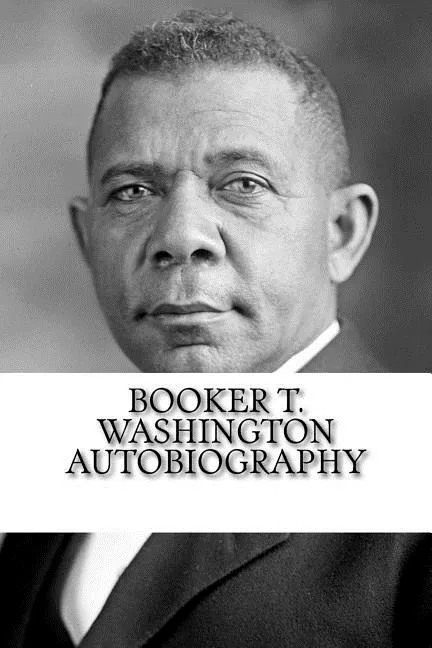
Booker T. Washington Autobiography
Report an issue
Tell us what's wrong and we'll take a look.
Thanks – we got it. We'll review and follow up if needed.
The autobiography of Booker T. Washington shares his personal experience of having to work to rise up from the position of a slave child during the Civil War, to the difficulties and obstacles he overcame to get an education at the new Hampton Institute, to his work establishing vocational schools-most notably the Tuskegee Institute in Alabama-to help black people and other disadvantaged minorities learn useful, marketable skills and work to pull themselves, as a race, up by the bootstraps. He reflects on the generosity of both teachers and philanthropists who helped in educating blacks and Native Americans. He describes his efforts to instill manners, breeding, health and a feeling of dignity to students. His educational philosophy stresses combining academic subjects with learning a trade (something which is reminiscent of the educational theories of John Ruskin). Washington explained that the integration of practical subjects is partly designed to reassure the white community as to the usefulness of educating black people. This book was first released as a serialized work in 1900 through The Outlook, a Christian newspaper of New York. This work was serialized because this meant that during the writing process, Washington was able to hear critiques and requests from his audience and could more easily adapt his paper to his diverse audience. Washington was a controversial figure in his own lifetime, and W. E. B. Du Bois, among others, criticized some of his views. The book was, however, a best-seller, and remained the most popular African American autobiography until that of Malcolm X. In 1998, the Modern Library listed the book at No. 3 on its list of the 100 best nonfiction books of the 20th century, and in 1999 it was also listed by the Intercollegiate Review as one of the "50 Best Books of the Twentieth Century".
Booker T Washington
Born into slavery, Booker T. Washington (1856–1915) went on to become an American educator, author, and adviser to the presidents of the United States. As a self-educated man, Washington believed in accessible education for the post-slavery black community. In 1881, Washington became the first leader of the Tuskegee Institute, an all-black school. In 1895, due to lynching plaguing the South, Washington gave his infamous “Atlanta Compromise” speech, which brought him national recognition. Washington became a seminal leader in the field of Black politics, working with communities to build schools and churches despite the criticism he faced for his involvement with prominent white leaders. His prolific writing career includes fourteen books, most notably Up from Slavery and The Future of the American Negro.
More by Booker T Washington



Why Readwise Books?
Readwise Books is an ebook & audiobook platform that automatically logs how much you and your friends read, making it fun and easy to read more. Learn more →