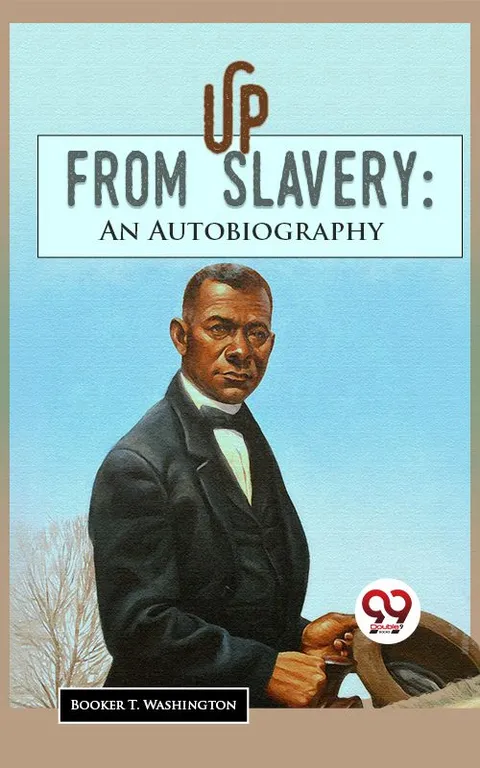
Up From Slavery: An Autobiography
Report an issue
Tell us what's wrong and we'll take a look.
Thanks – we got it. We'll review and follow up if needed.
The 1901 autobiography of American Educator Booker T. Washington is titled Up from Slavery (1856–1915). Up from Slavery details Washington's life for more than forty years, from his time as a slave through his time as a schoolteacher and his role as the face of racial relations in the South. Through laborious, manual effort, a good education, and connections with admirable people, Washington advances in this text's social hierarchy. He emphasizes the value of education for the black community throughout the book as a practical strategy to improve racial relations in the South (particularly in the context of Reconstruction). Washington's conventional, non-confrontational message is essentially what the book is about, and it is backed by the example of his life. It is the story of Education, Industriousness, Humility, The people's capacity for change and Poverty among the black population.
Booker T. Washington
Born into slavery, Booker T. Washington (1856–1915) went on to become an American educator, author, and adviser to the presidents of the United States. As a self-educated man, Washington believed in accessible education for the post-slavery black community. In 1881, Washington became the first leader of the Tuskegee Institute, an all-black school. In 1895, due to lynching plaguing the South, Washington gave his infamous “Atlanta Compromise” speech, which brought him national recognition. Washington became a seminal leader in the field of Black politics, working with communities to build schools and churches despite the criticism he faced for his involvement with prominent white leaders. His prolific writing career includes fourteen books, most notably Up from Slavery and The Future of the American Negro.
More by Booker T. Washington




Why Readwise Books?
Readwise Books is an ebook & audiobook platform that automatically logs how much you and your friends read, making it fun and easy to read more. Learn more →