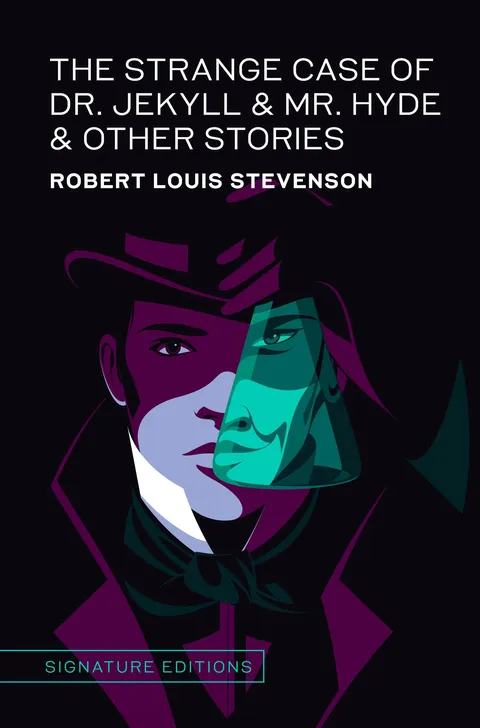
The Strange Case of Dr. Jekyll & Mr. Hyde & Other Stories
Report an issue
Tell us what's wrong and we'll take a look.
Thanks – we got it. We'll review and follow up if needed.
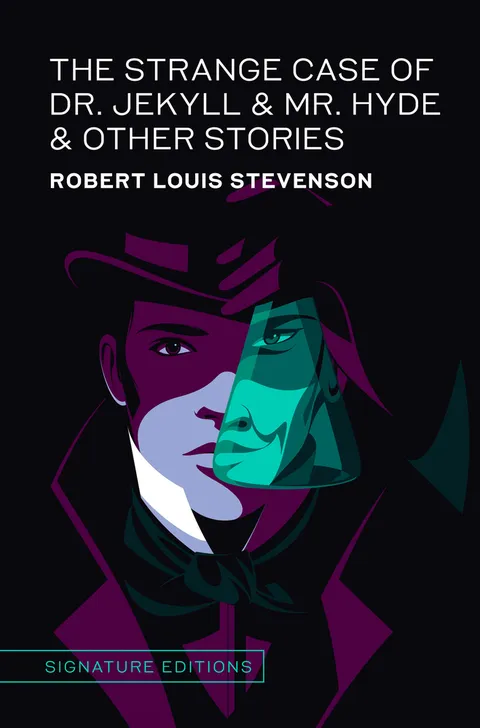
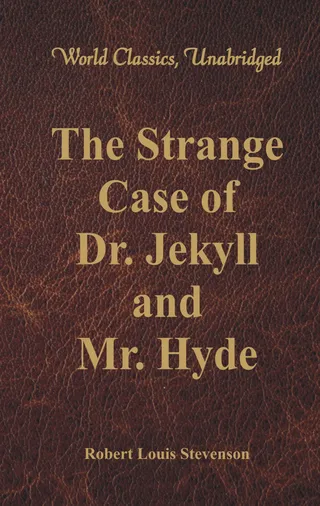
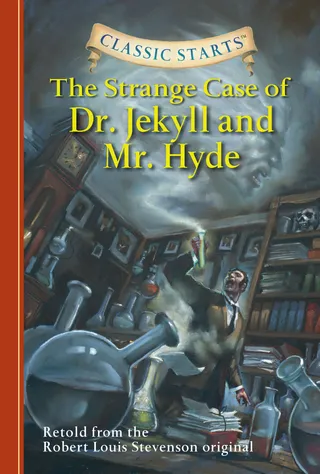
What a study in contrasts is the friendship between Henry Jekyll and his boon companion, Edward Hyde. Where Jekyll is a handsome and respected man of science, Hyde is a surly and brutish misanthrope. Nevertheless, Jekyll has allowed Hyde free access to his home and laboratory and, surprisingly, made him the sole beneficiary of his will. Given the closeness of their bond, it seems peculiar that no one has ever seen the two men together in public. And yet they share a remarkable chemistry . . .
First published in 1886, The Strange Case of Dr. Jekyll and Mr. Hyde is Robert Louis Stevenson’s classic tale of the duality of human nature and his iconic presentation of what would come to be referred to as the “split personality.”
Robert Louis Stevenson
Robert Louis Stevenson was born in Edinburgh in 1850, the only son of an engineer, Thomas Stevenson. Despite a lifetime of poor health, Stevenson was a keen traveller, and his first book An Inland Voyage (1878) recounted a canoe tour of France and Belgium. In 1880, he married an American divorcee, Fanny Osbourne, and there followed Stevenson's most productive period, in which he wrote, amongst other books, Treasure Island (1883), The Strange Case of Dr Jekyll and Mr Hyde, and Kidnapped (both 1886). In 1888, Stevenson left Britain in search of a more salubrious climate, settling in Samoa, where he died in 1894.
More by Robert Louis Stevenson


Why Readwise Books?
Readwise Books is an ebook & audiobook platform that automatically logs how much you and your friends read, making it fun and easy to read more. Learn more →